
Barry spares much of Louisiana; tropics quiet once again

It was expected to be a Hurricane at landfall. It was expected to bring 15 to 20″ of flooding rains because of the slow moving storm. Overall, the forecasting for the storm was very good. If there is something you wanted to be wrong, it was that there would not be as much rain. Thankfully, that is what happened.

The forward speed of the storm determines how much rain will fall. This was a slow moving hurricane. So why did the rainfall amounts not add up? It was because Barry was a very malformed hurricane. Loads of dry air to the north of Barry and northerly wind shear kept much of the strong convection offshore as the center of Barry made landfall on Saturday. Then as the center continued to move inland it started to leave much of its energy still just offshore.

There still were some bands that caused flooding rains, but they were generally further west and more isolated. While Hurricane Barry did cause flooding, damage, and power outages, it will be remembered as a storm that spared the coast as it made landfall.

As the last of the rains wind down over Arkansas, the tropics are quiet once again.There are a number of tropical waves in the Atlantic and in the Caribbean, but none of them show any signs of development over the next 5 days.
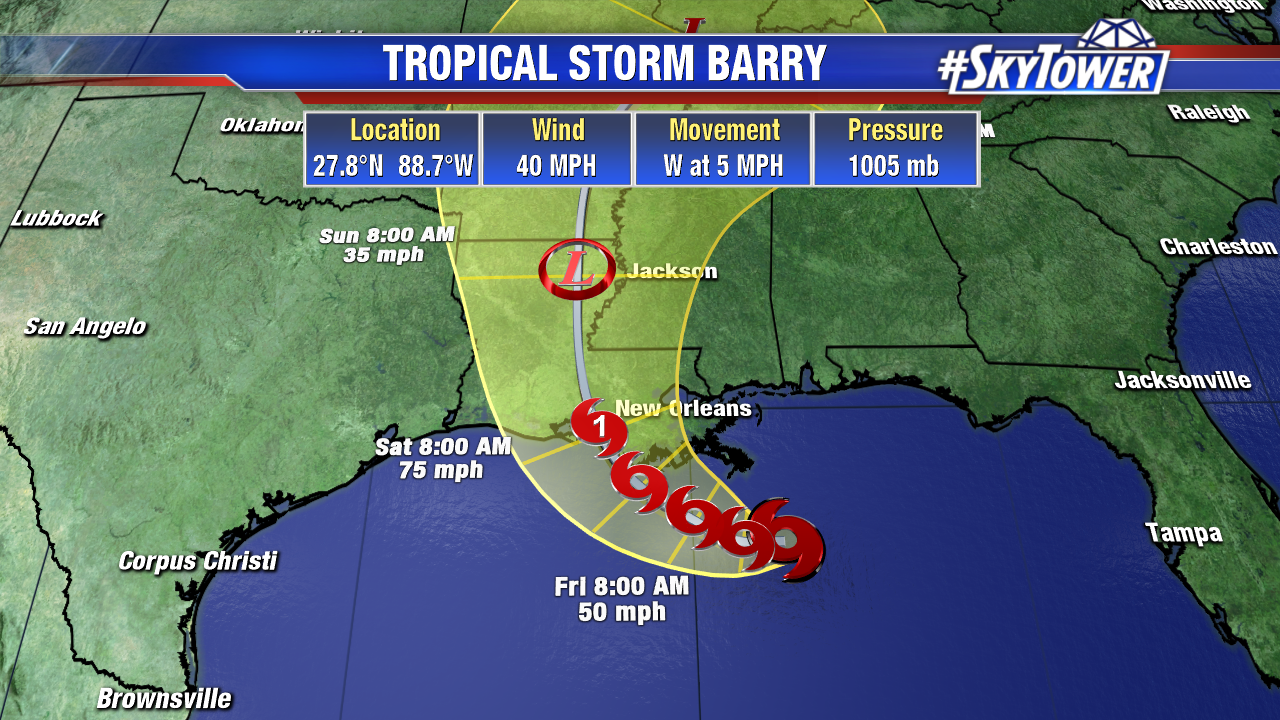
Tropical Storm Barry Forms In The Gulf; Expected To Cause Major Flooding

11am Thursday: Tropical Storm Barry has now formed about 95 miles south of the mouth of the Mississippi River. It is expected to slowly strengthen over the next 36 hours or so as environmental conditions become more favorable. Current intensity forecast from the National Hurricane Center has Barry becoming a category 1 hurricane with winds of 75 mph prior to landfall.

Regardless of whether or not this intensity forecast comes to fruition, Barry will create a dangerous flooding threat across much of the lower Mississippi Valley over the weekend into early next week. The Mississippi is already swollen from springtime flood waters flowing south, as well as recent heavy rains. Adding to that, a swath of 10-20″ of rain is expected to fall across southern Louisiana and parts of Mississippi over the next few days.

This could be a particularly dangerous situation in places like New Orleans. Along the Mississippi, Levees protect to an average of 20 feet in the city. Current forecast river height in this area is 19 feet by Saturday night. Levees will be tested and there is likely to be water spilling over in some areas.

For the latest watches/warnings visit the National Hurricane Center or your local National Weather Service website.