2026 Atlantic Hurricane Season Preview

As we head into the heart of May, our Atlantic hurricane season is right around the corner. Today marked the release of the first official tropical outlook from the National Hurricane Center.

While there are no immediate concerns in the Atlantic Basin, meteorologists are already beginning to analyze early clues that could give us an early indication of this season’s activity.

One of the most closely watched preseason forecasts comes from Colorado State University. Their seasonal outlook calls for a near or below-average Atlantic hurricane season, with a large reason being the increasing likelihood of a El Niño pattern developing soon.

El Niño is a natural warming of the equatorial Pacific Ocean that influences weather patterns across the globe. For hurricane season, one of its biggest impacts is increasing upper-level wind shear across the Atlantic Basin. That matters because hurricanes thrive in environments with low wind shear. Strong winds at different levels of the atmosphere can tear storms apart, often leading tropical systems struggle to organize and intensify.

Statistically, the numbers support that relationship. During El Niño seasons, the average number of U.S. landfalling hurricanes tends to decrease compared to neutral or La Niña years.

However, El Niño does not eliminate hurricane risk. Some of the most destructive and memorable hurricanes in modern history still occurred during El Niño years. Storms like Hurricane Andrew and Hurricane Idalia each developed despite the presence of El Niño conditions, proving it only takes one storm in the wrong place at the wrong time to create a disaster.

While El Niño can suppress Atlantic hurricane activity, it often shifts Florida’s winter pattern in the opposite direction. Historically, El Niño winters bring more frequent storm systems, cooler stretches, increased rainfall across Florida, and a higher severe weather and tornado potential. That’s mainly because the subtropical jet stream becomes stronger and more active across the Gulf Coast and Southeast.

Right now, the Pacific Ocean remains in a neutral ENSO phase, meaning neither El Niño nor La Niña is currently dominant.

That phase may not last long. Weather forecast models continue to show a very high likelihood that El Niño could emerge in the coming months.

Complicating that forecast, are the mixed signals our ocean temperatures are providing. We have above-average warm water temperatures in the Gulf and Caribbean and below-average water temperatures in the central and eastern Tropical Atlantic. This is another variable that may play a roll in the amount and location of future storms.

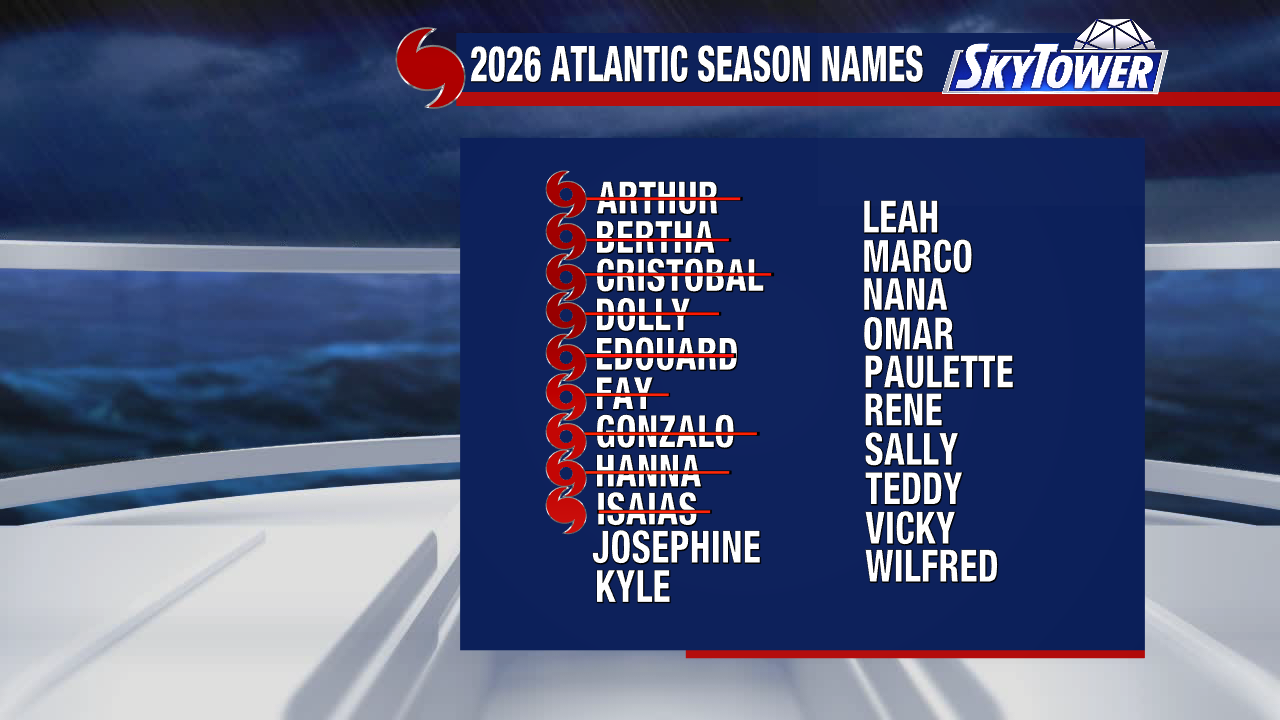
Each season brings us a new naming list. These cycle every six years and the World Meteorological Organization retires names when storms become so deadly or costly that reusing the name would be inappropriate. “Leah” now replaces “Laura”, which was retired after causing over 23 billion dollars worth of damage as a major hurricane in 2020.

Even though hurricane season officially begins June 1st, it’s typically a quiet start. Activity usually ramps up gradually through the summer before peaking in late August through September. While preseason forecasts and climate patterns can help paint the bigger picture, preparation remains the most important step regardless of how active a season is expected to be. It only takes one storm to make it an impactful season where you live.

2025 Atlantic Hurricane Season Concludes

The 2025 Atlantic hurricane season has officially wrapped up, and this year Florida caught a break.

2025 brought no U.S. or Gulf Coast hurricane landfalls, marking a shift from the high-impact seasons we’ve experienced recently.

While Florida stayed quiet, the Atlantic Basin still saw five hurricanes, three of which were Category 5 storms. The season ended with above normal ACE (Accumulated Cyclone Energy) or overall storm energy.


When comparing 2025 to the 2024 season, the difference is stark. 2024 had far more named storms and hurricanes.

Hurricane Melissa, a late-season Category 5 hurricane, was the most impactful storm of 2025. It made its first landfall in Jamaica as one of the strongest land falling storms ever recorded in the Atlantic. Melissa was also the first storm to either form or travel over the unseasonably warm waters of the Caribbean Sea this year.