Hurricane Ian Continues To Rapidly Intensify; Hurricane Warnings In Effect Along Florida’s West Coast

Hurricane Ian’s sustained winds have now increased 55 mph over the last 24 hours – far surpassing the criteria to qualify for rapid intensification. Further intensification is expected as the storm remains in a very favorable environment. It’ll likely become a major hurricane at some point tonight.
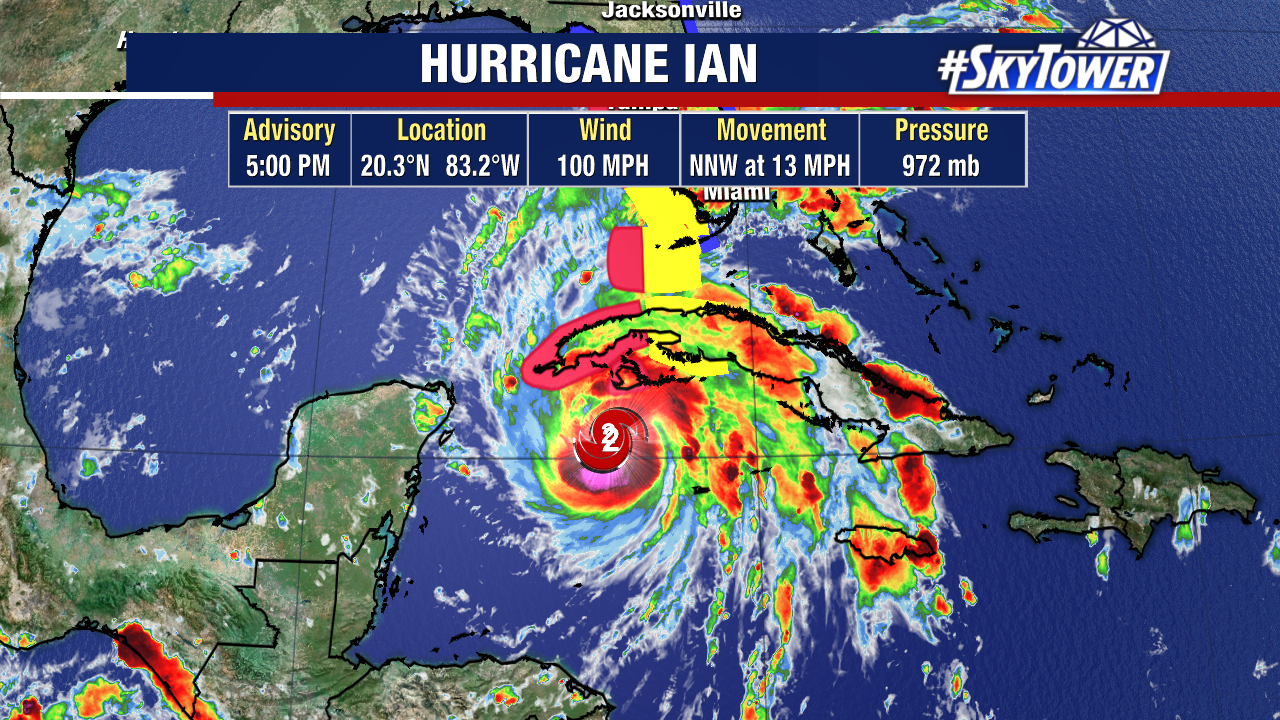
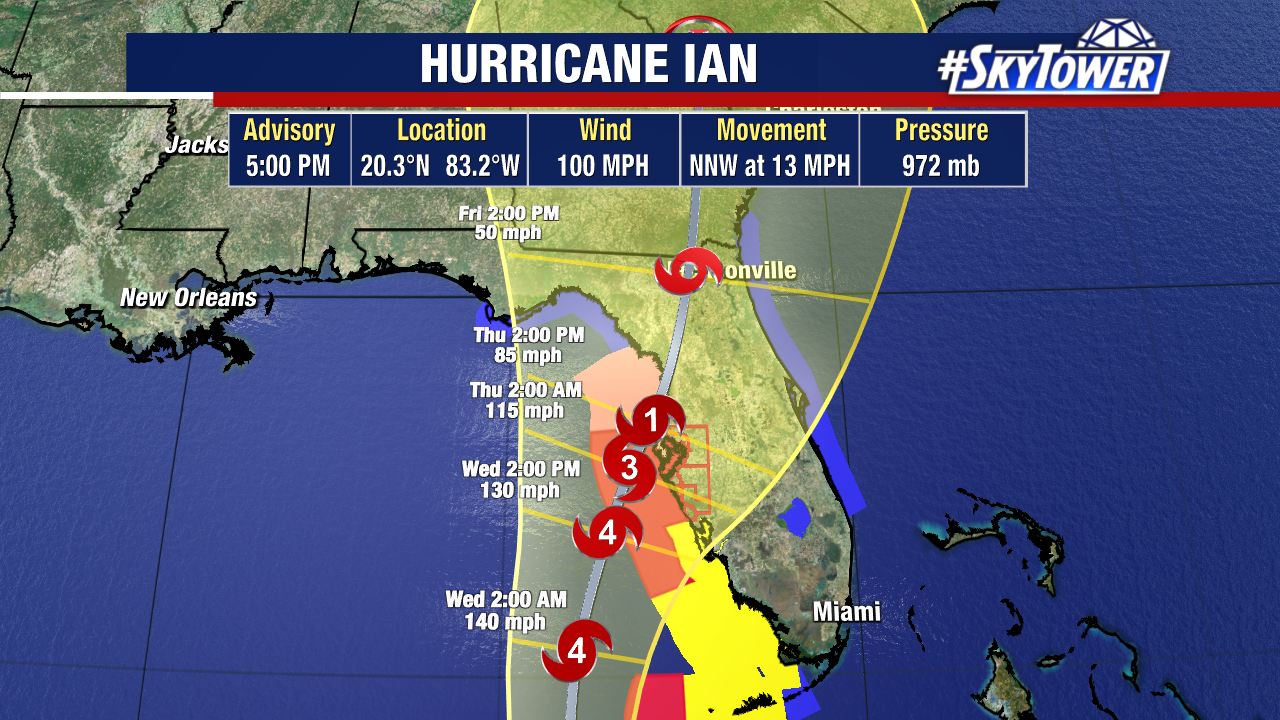
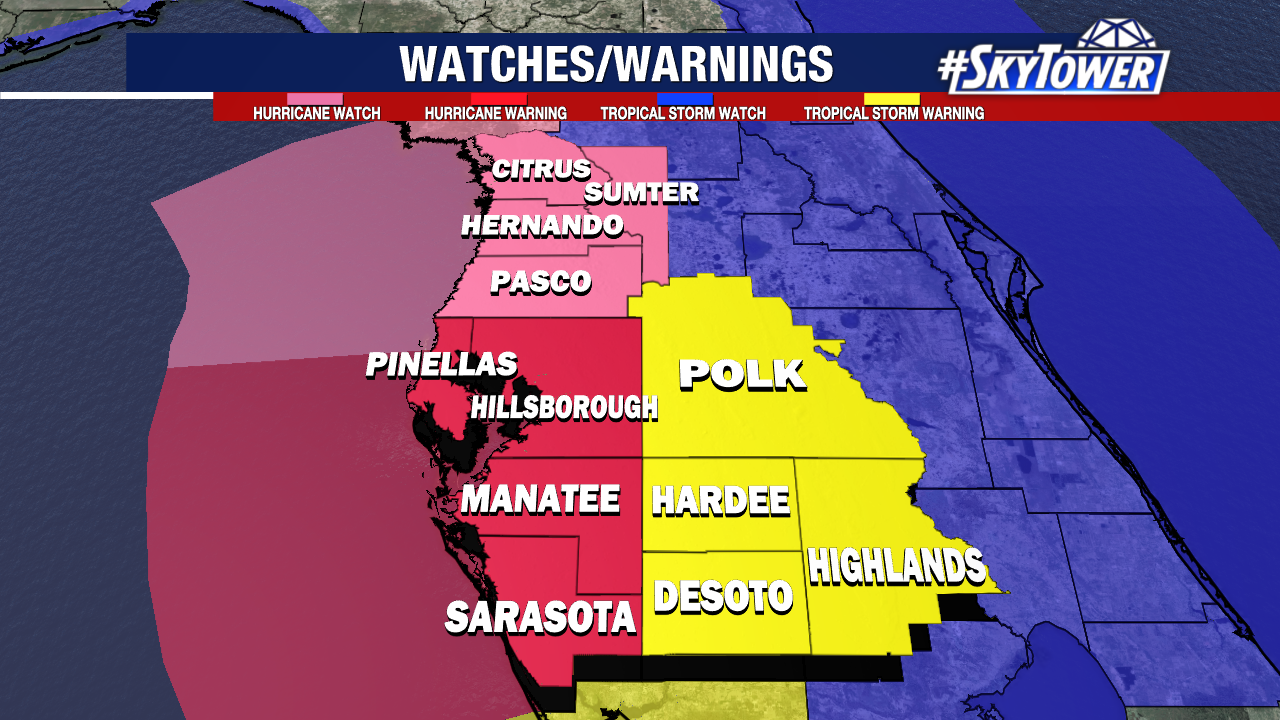
Hurricane watches and warnings are now posted up and down Florida’s west coast, along with storm surge watches and warnings.
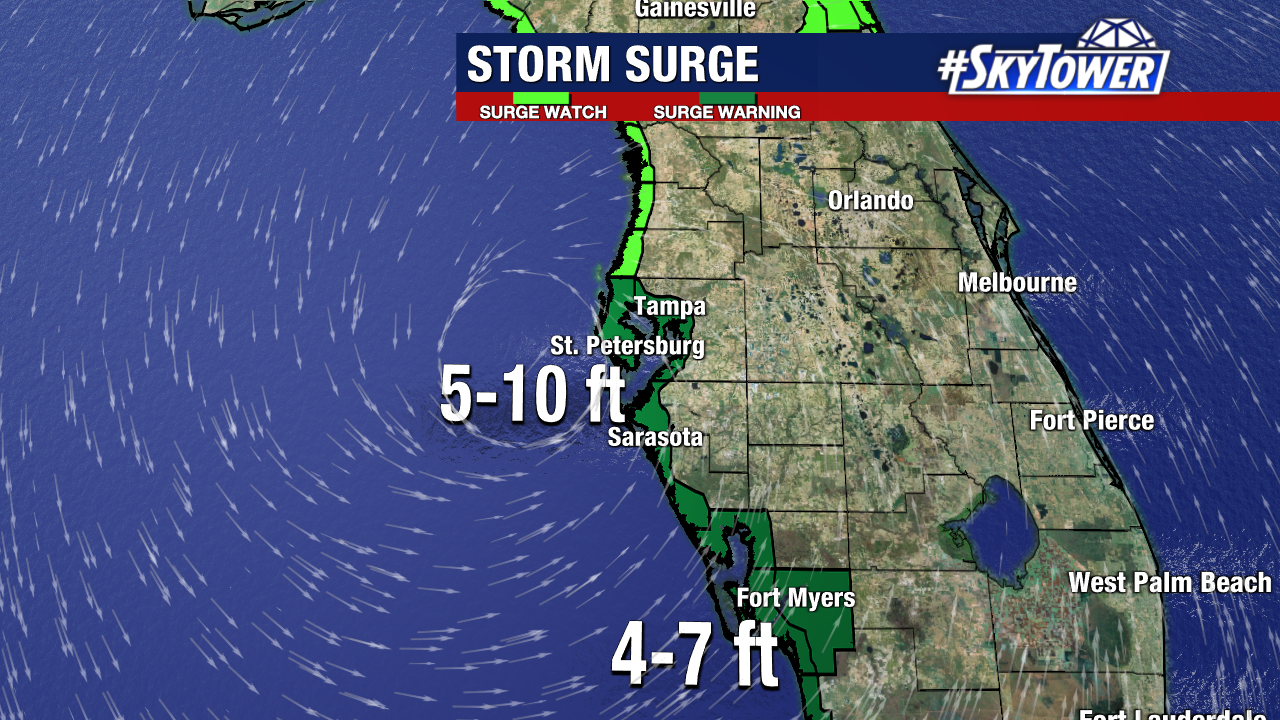
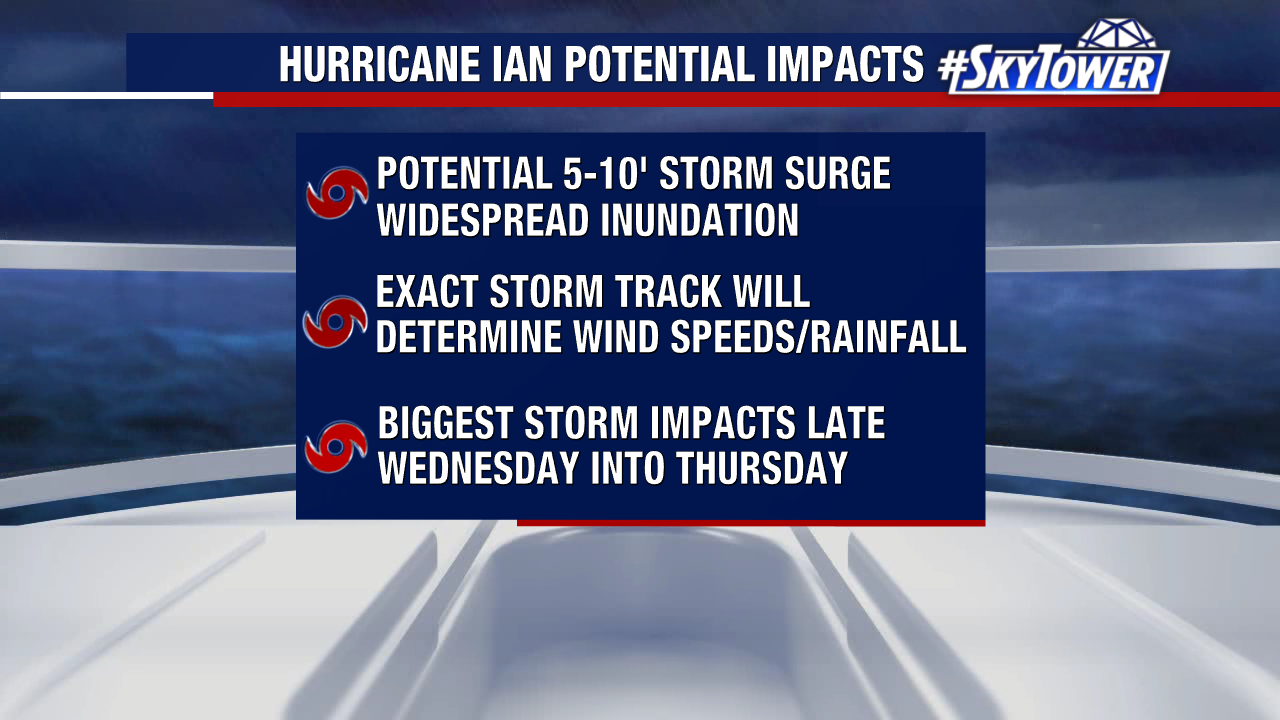
Storm surge is most confident part of the impact forecast at this point. The highest expected surge as of now will be on the order of 5-10′ from Anclote Key to Longboat, with lesser totals elsewhere. Additionally, the storm’s slow forward motion could add to these expected surge totals. This type of prolonged surge event poses a significant threat to life and property along the coast. If told to evacuate, you need to go.
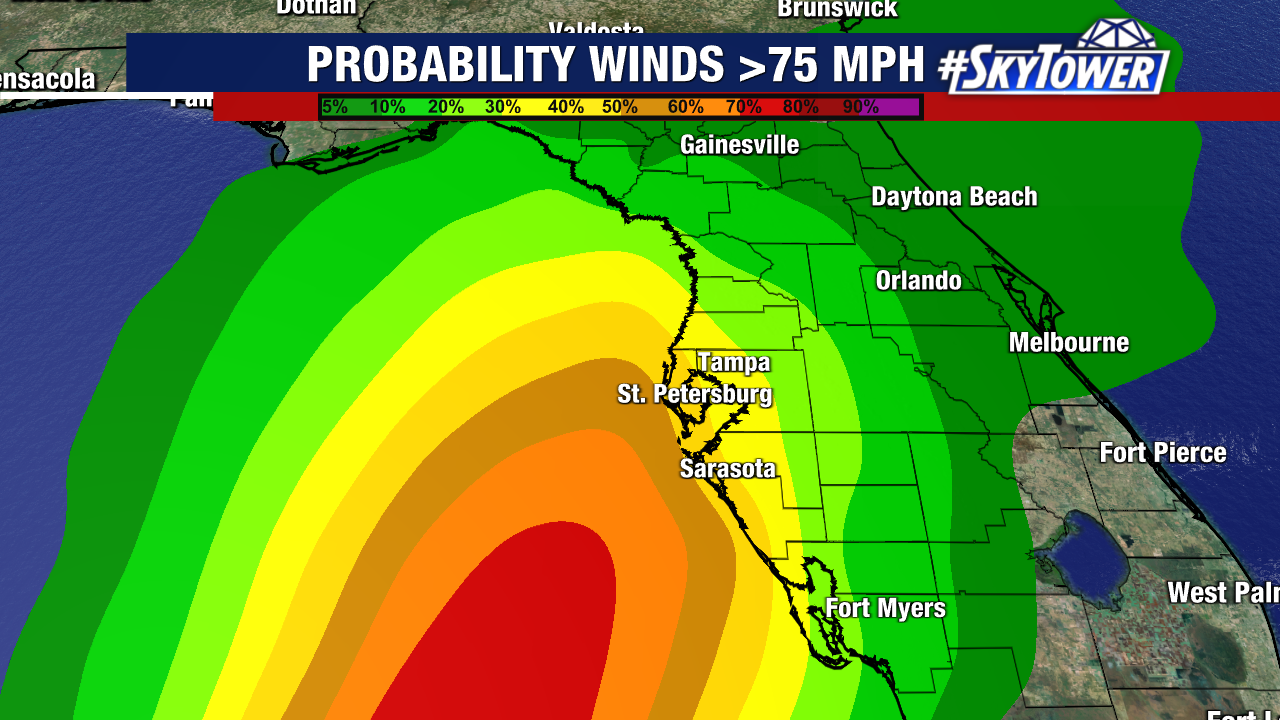
With respect to expected wind speeds and rainfall, things are a bit more complicated due to the roughly parallel shore track. If the track is a little further offshore, expected wind speeds could be greatly reduced, If the track is closer to shore, they may greatly increased. If you are under a hurricane warning, prepare for at least a period of hurricane-force wind gusts. If under a tropical storm warning, know that your wind speeds could be higher than tropical-storm force if the storm track closer to shore. The hope of course is for a track further offshore, but you must prepare for the worst case scenario.
Tropical Storm Ian forecast to rapidly intensify, questions remain on eventual track

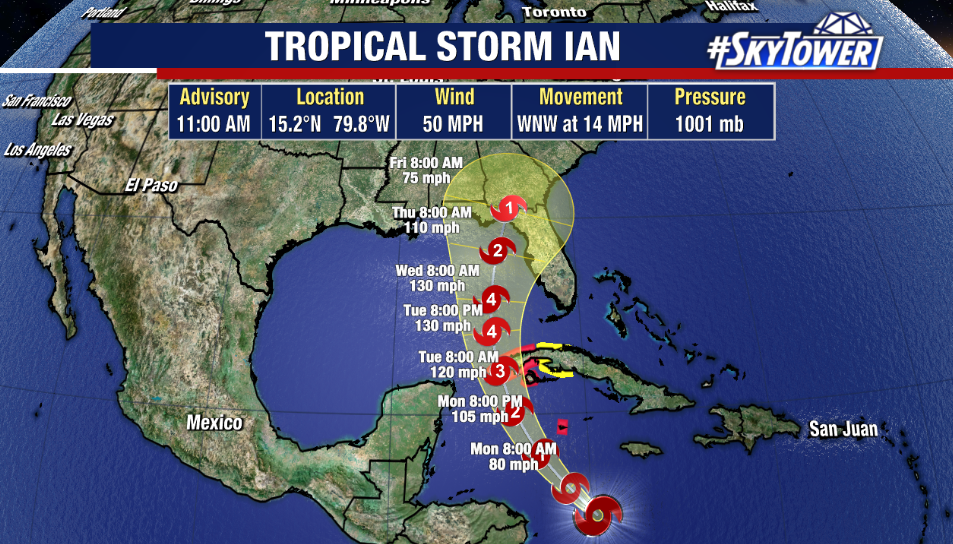
Tropical Storm Ian is gradually looking better on satellite presentation this morning including the overall circulation and center of the storm. As of the 11 AM Advisory, Ian had maximum sustained winds of 50 mph and was moving WNW at 14 mph with a pressure of 1001 mb. While its strength has not changed much, Ian is expected to go through a process of rapid intensification later today as it passes well southwest of Jamaica in an environment of light wind shear and deep, warm water.

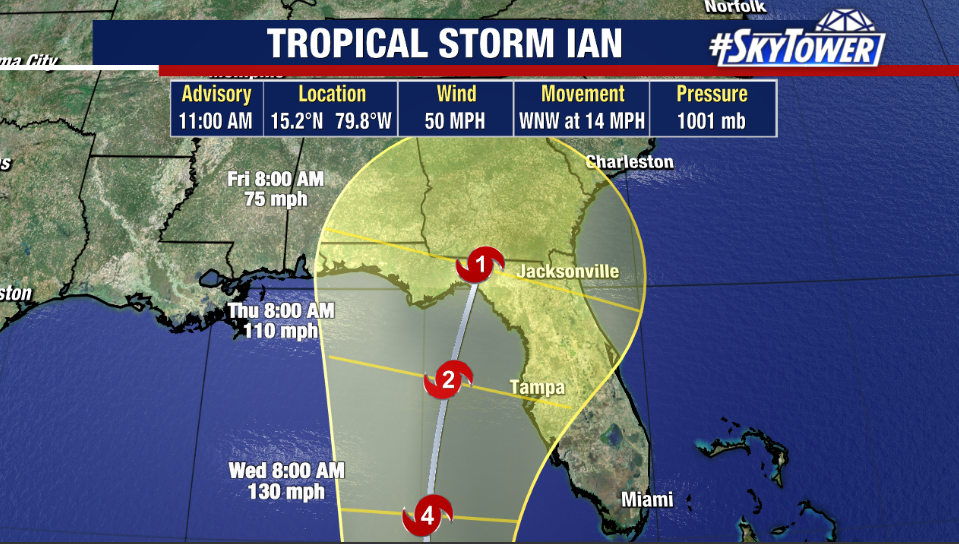
Ian will then slowly turn more NW around the western side of the subtropical ridge taking the center southwest of Grand Cayman by Monday morning likely as a hurricane. As Ian taps into the favorable environment of the northern Caribbean Sea Monday, we could see the storm ramp up to category 3 major hurricane strength by the time Ian slams into western Cuba 24 hours later. A Hurricane Warning has been issued for parts of Cuba.

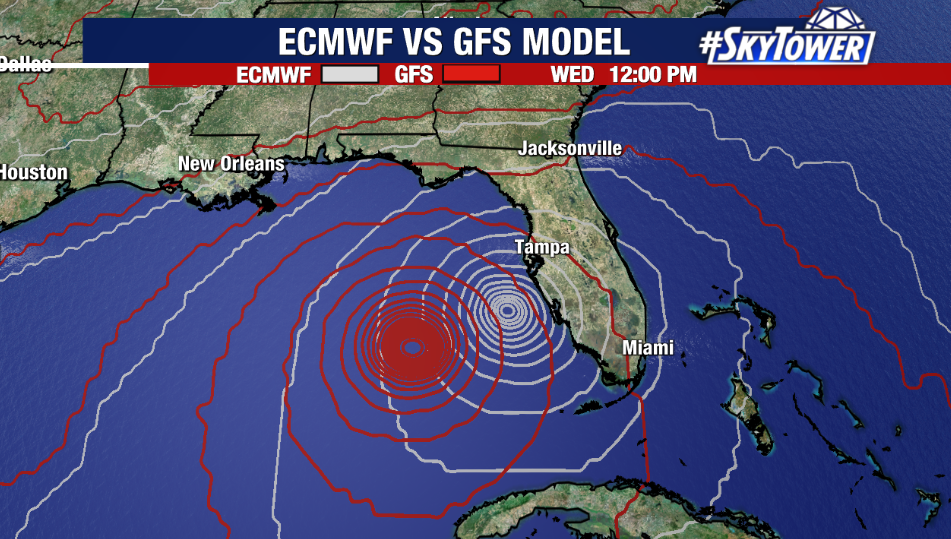
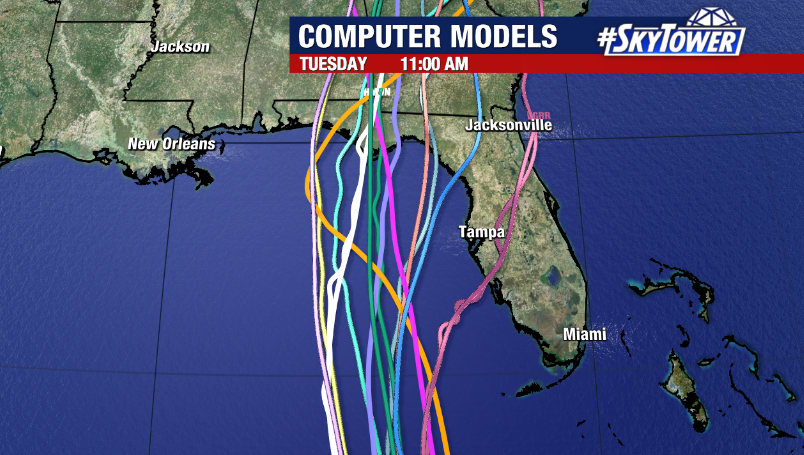
While we have a good handle on that part of the forecast, it is beyond Tuesday that things get a bit murky. Long range forecasts continue to disagree with a large degree of spread leading to ‘significant uncertainty’ in the eventual track and local impacts from the storm. While the GFS solution still favors a track further west that parallels the Peninsula, the Euro solution remains adamant on a path farther east into west-central Florida. Either way, we could be looking at a significant hurricane passing to our west, which would put the Tampa Bay region on the east side of the storm, where potential impacts could include dangerous storm surge, hurricane force winds, heavy rain, and severe weather. However, the magnitude of those impacts would depend on how closely the storm comes to the state.

The further north Ian travels in the Gulf, the less favorable the environment it’ll move into, causing the storm to weaken some. The other consideration is the timing. Because the storm will appear to slow down before emerging into the Gulf, local impacts wouldn’t be felt until Tuesday night at the earliest and more likely on Wednesday and Thursday.

The takeaway remains the same: the forecast track will continue to change and improve with time. Folks along the west coast of Florida, including the Tampa Bay region should plan and prepare for the possibility of a hurricane. Stay tuned as we continue to refine the forecast.