Tracking a tropical disturbance entering the Bay of Campeche


A tropical wave moving across the Yucatan Peninsula will enter the Bay of Campeche over the next couple of days, and have a small chance of development. Any impacts from it are expected to remain well away from Florida.
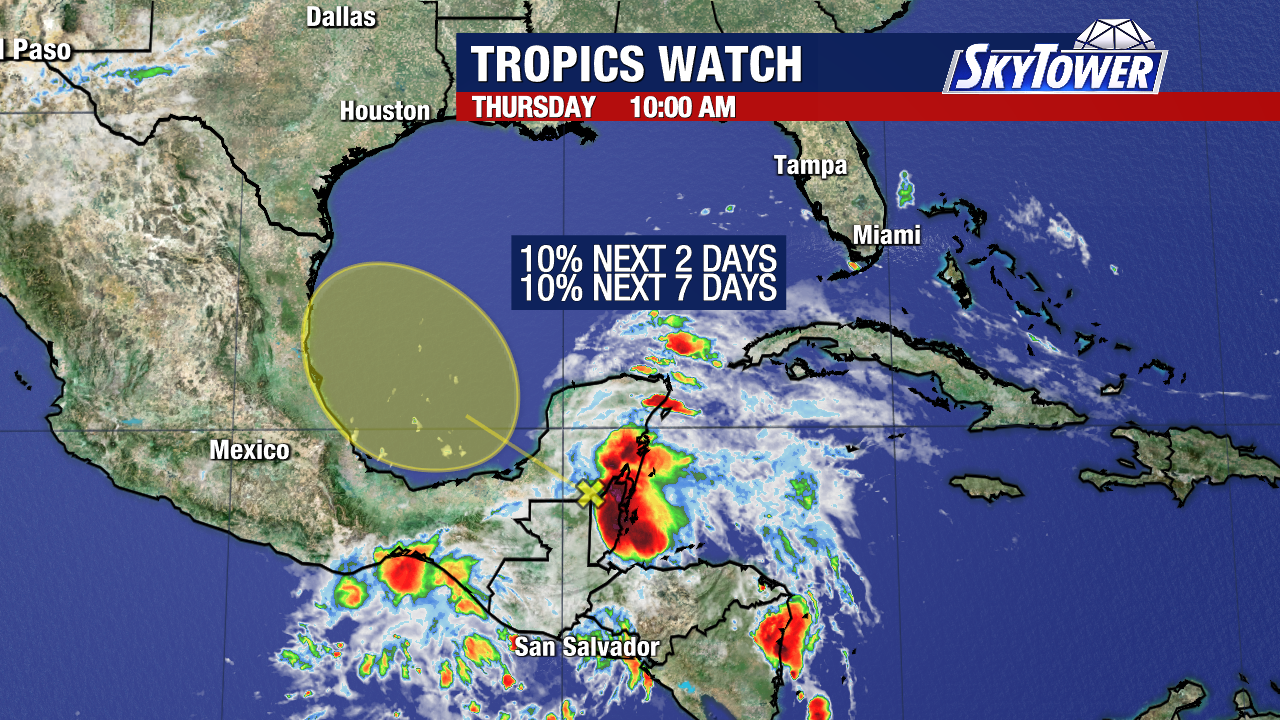
The National Hurricane Center has given the system a 10% chance of forming within the next seven days.
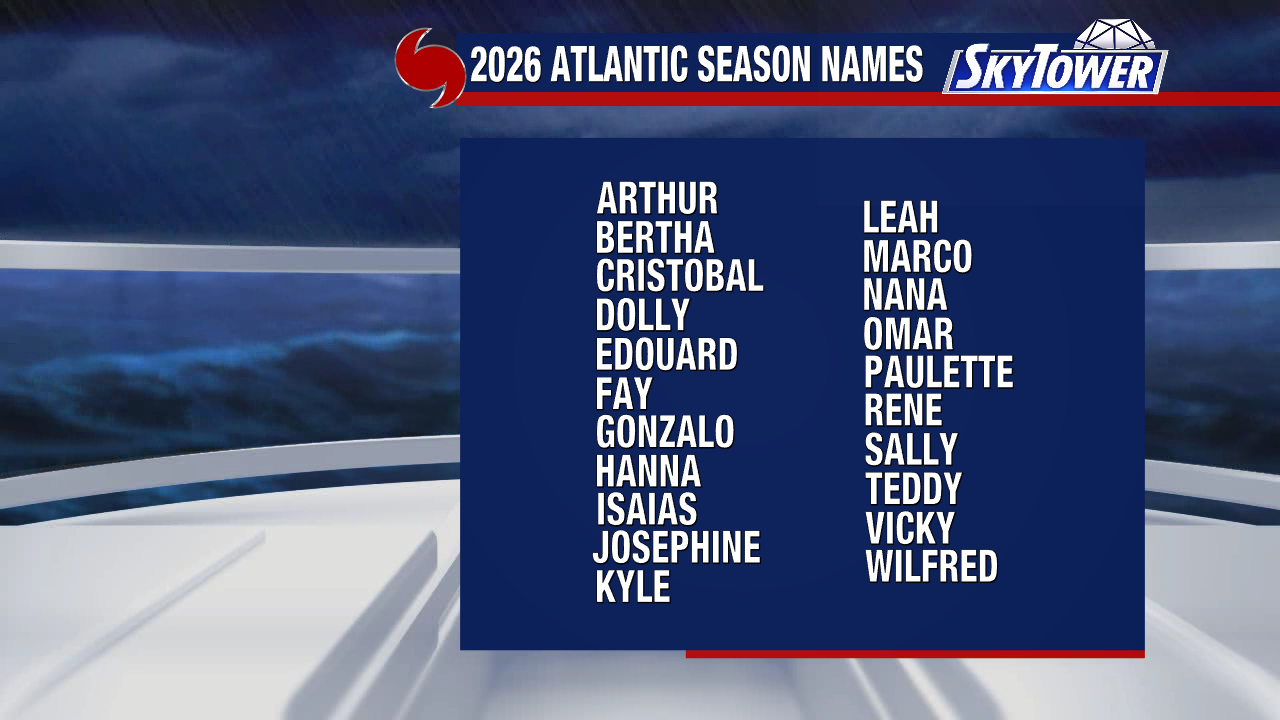
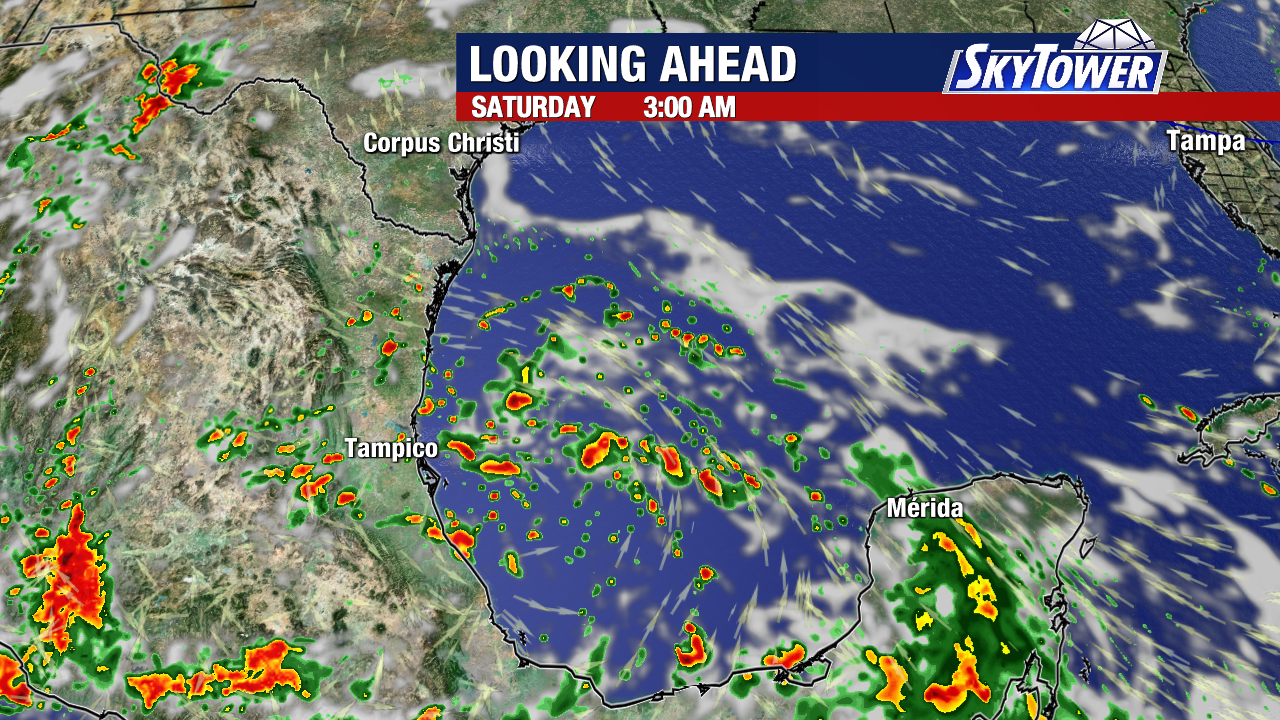
If it becomes a tropical storm, it would take the name “Arthur”. Regardless if the system organizes into a tropical storm, it will likely be a gusty rainmaker as it moves onshore the coast of Mexico late Saturday or Sunday.
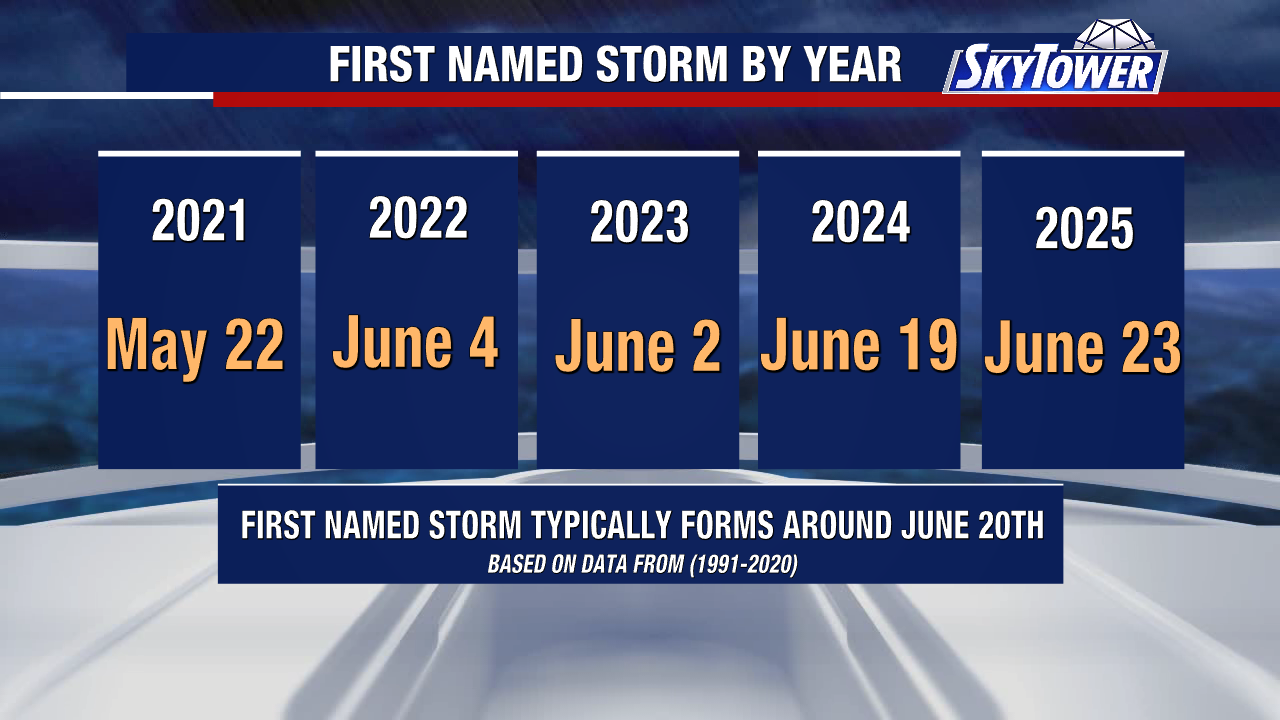
The middle of June is when the Atlantic typically receives its first named storm of the year. Recent seasons have started near or weeks before the average start date of June 20th.
The Climate Prediction Center has just confirmed that El Niño conditions are now officially present in the Pacific.
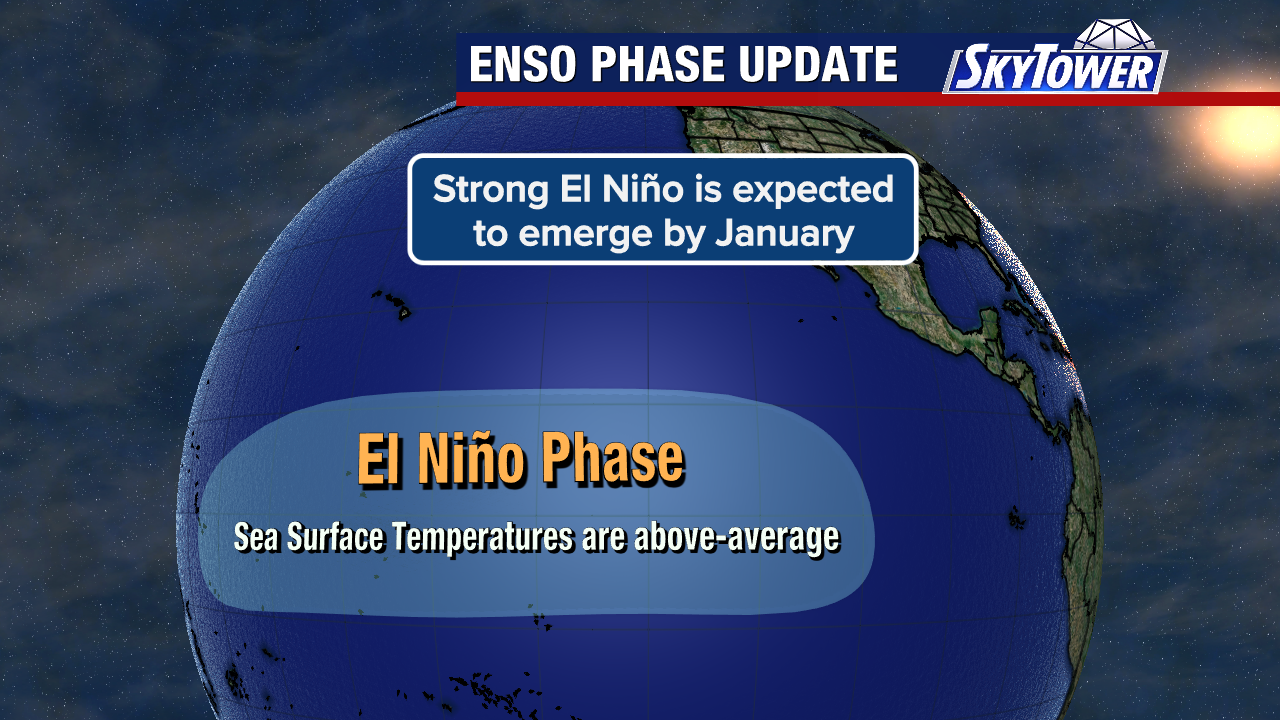
El Niño has historically led to less named storms during past Atlantic hurricane seasons.
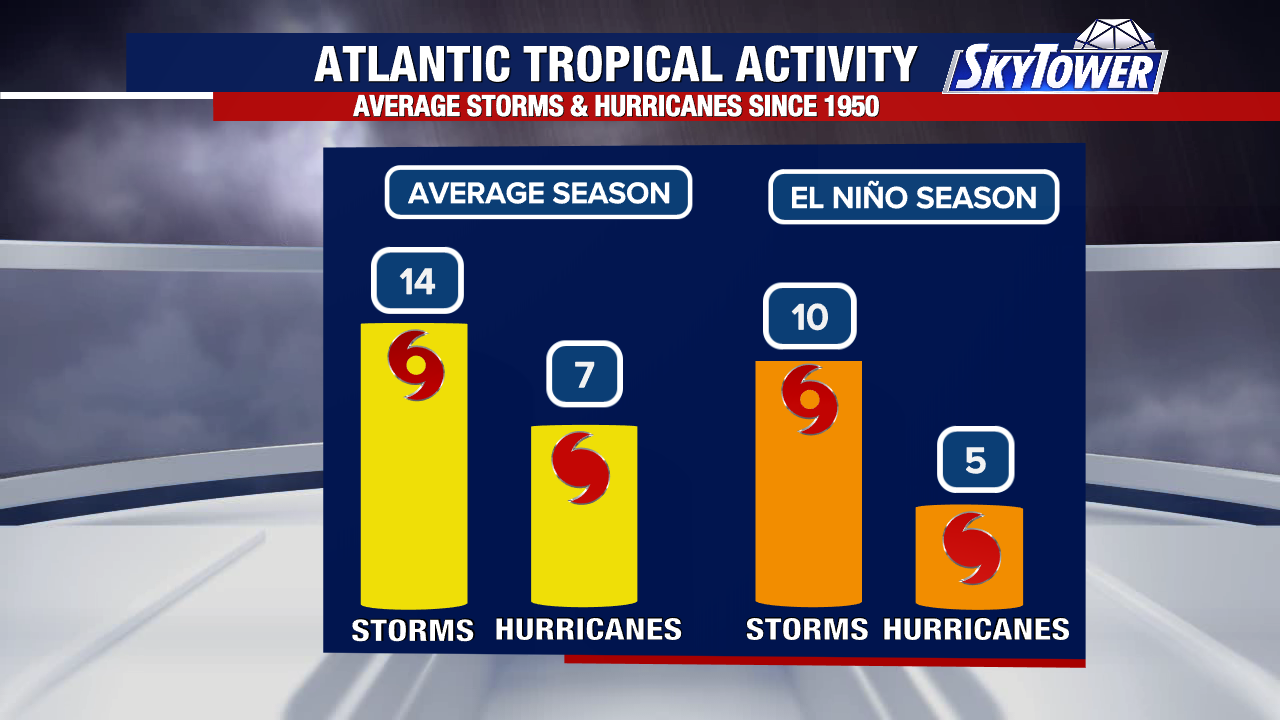
El Niño often increases upper-level winds across parts of the Atlantic Basic. Those hostile winds can disrupt tropical systems, often leading to fewer of them forming.
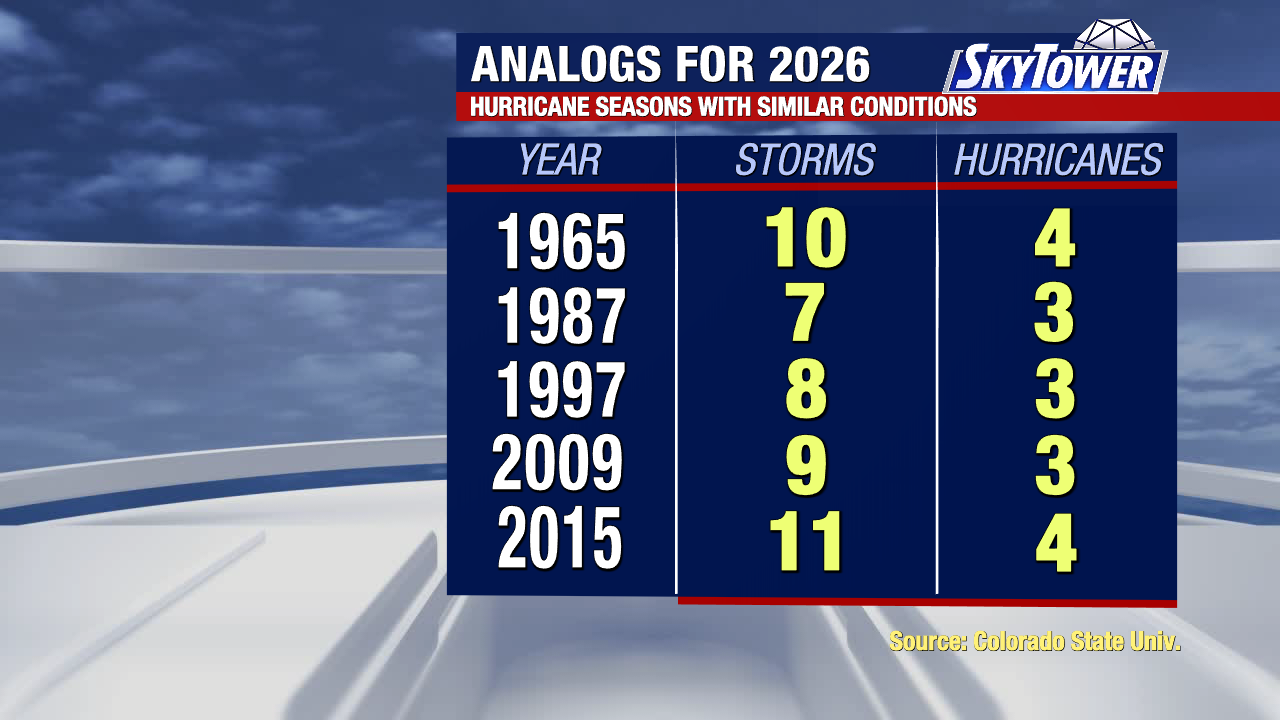
Historic hurricane seasons that with similar characteristics to 2026 produced fewer named storms and hurricanes than an average season. While no two seasons are exactly alike, these analog years support the idea that overall activity may be lower this year. Despite this, it only takes one storm to make it an impactful season. Every quiet stretch is a great time to review your hurricane plans and supplies for the year.
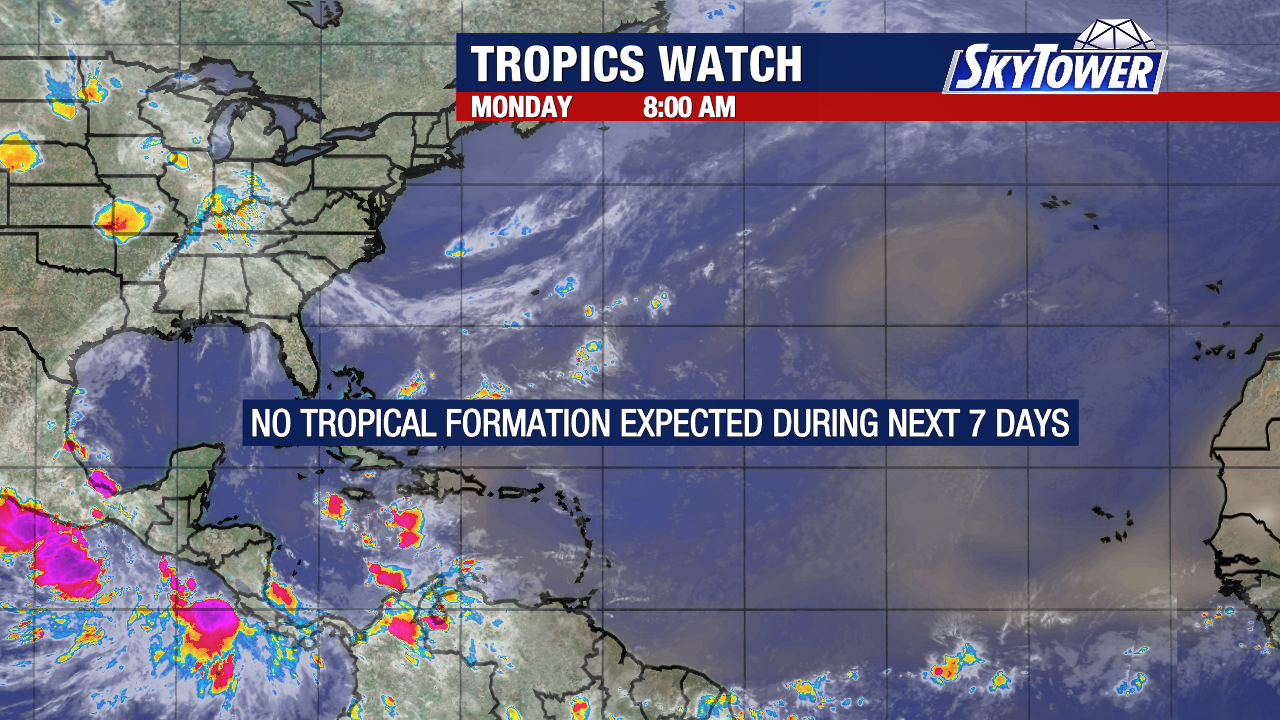
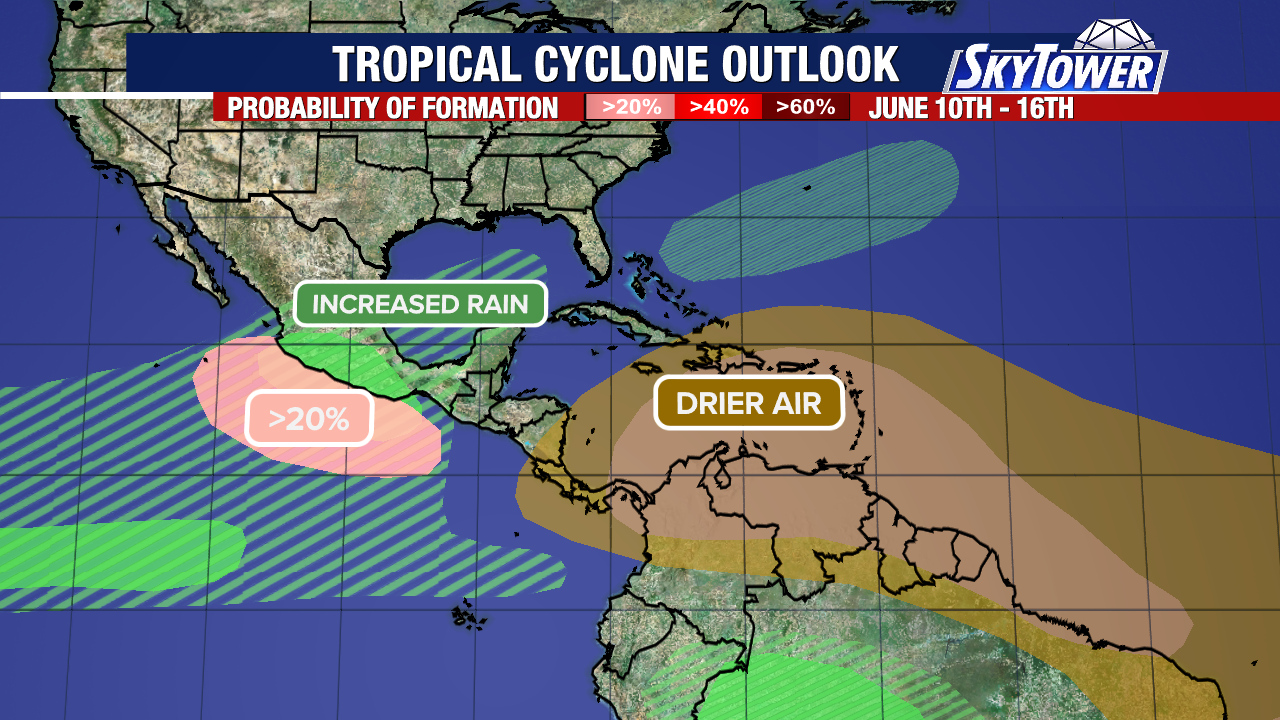
Atlantic Basin remains quiet with areas to watch in Eastern Pacific

We’re starting the second week of the hurricane season with the Atlantic Basin playing by the rules. No development is expected over the next 7 days.

Saharan dust is noticeable across parts of the Atlantic and Caribbean. This is typical early in the season as large plumes get carried from Africa.

The outlook for June 10 – 16 highlights drier air covering much of the eastern Caribbean, increased rain in parts of the Gulf and areas to watch in the Eastern Pacific.

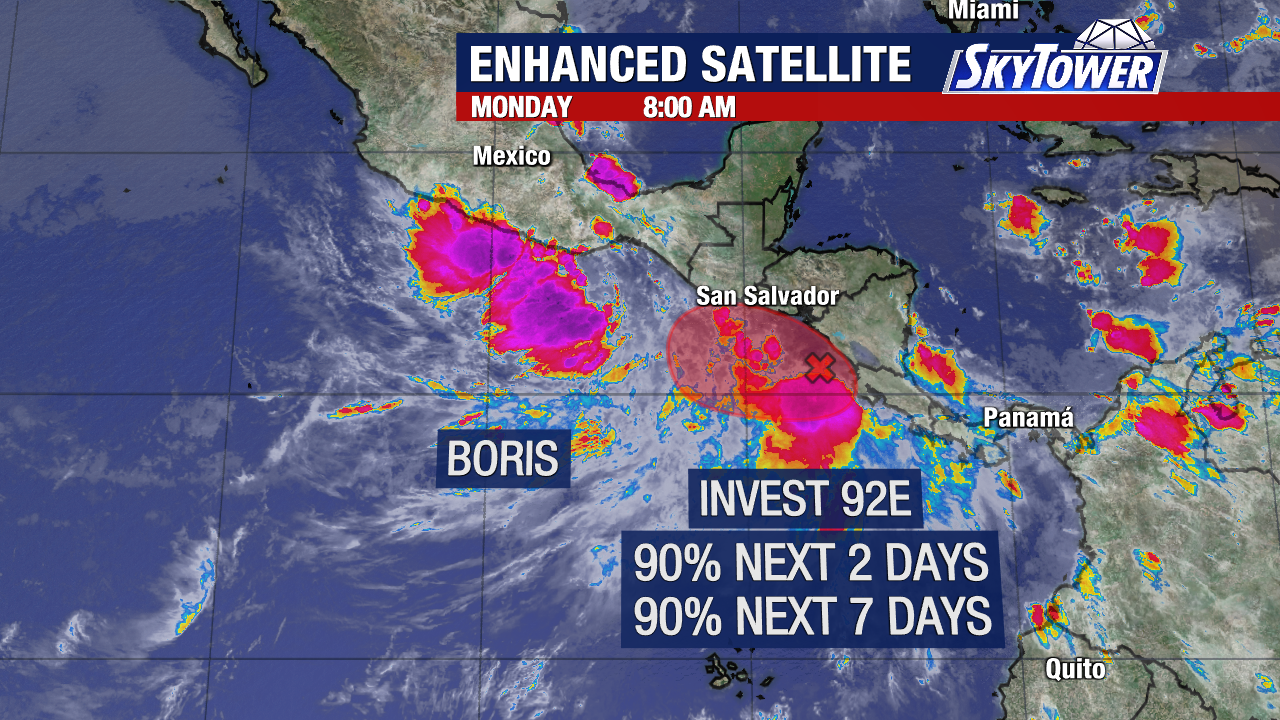
The Eastern Pacific hurricane season starts a few weeks earlier than the Atlantic and is off to a busy start.

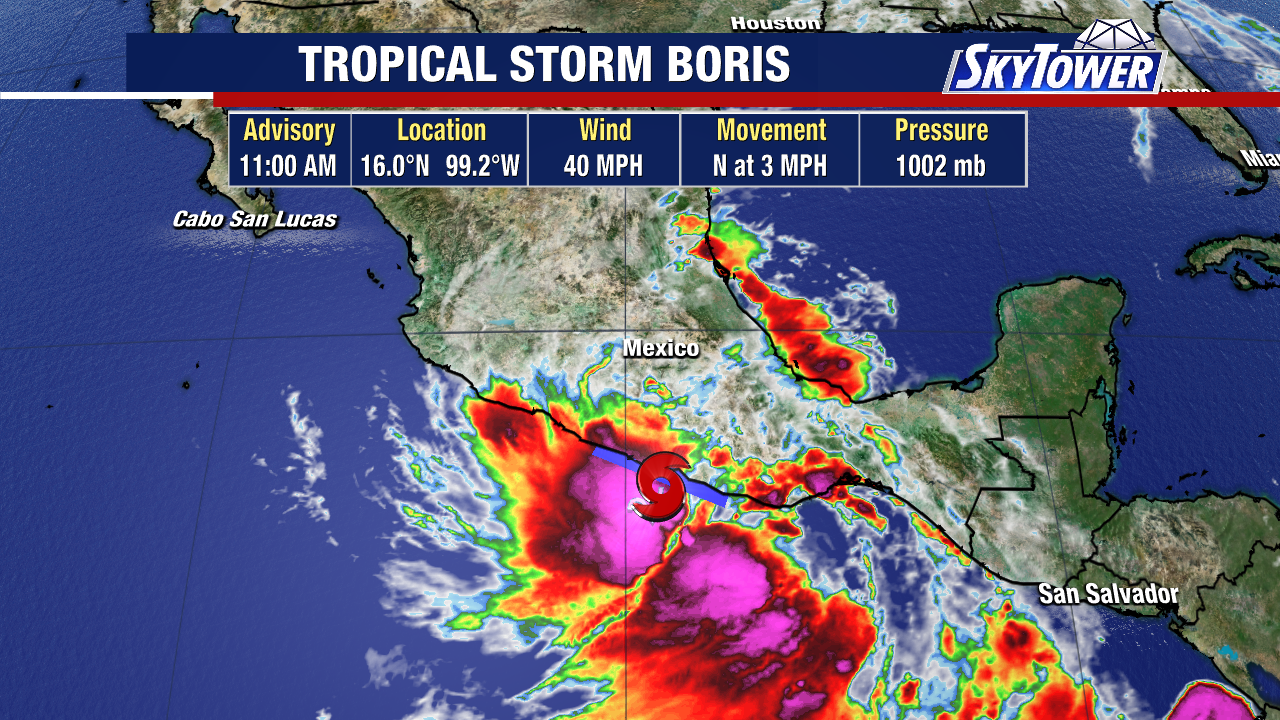
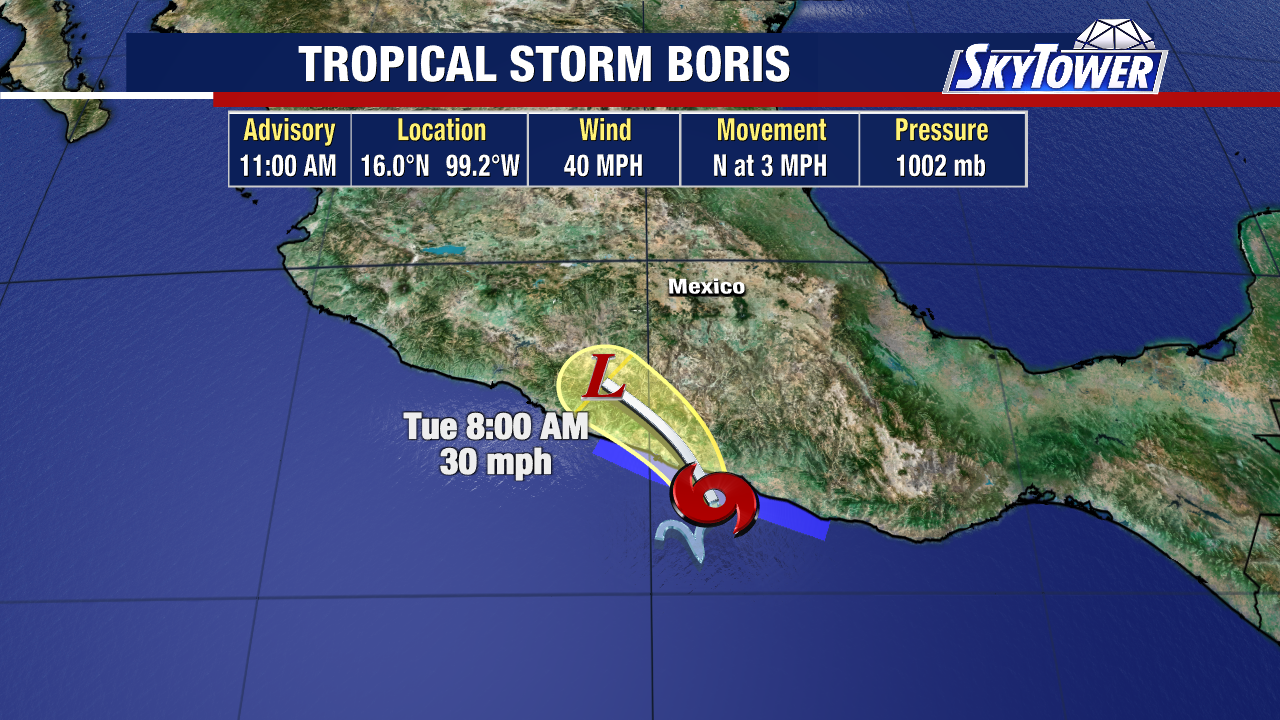
Tropical Storm Boris formed early Monday about 80 miles southeast of Acapulco, Mexico. It currently has maximum sustained wind speeds of 40 mph and is moving north at 3 mph.

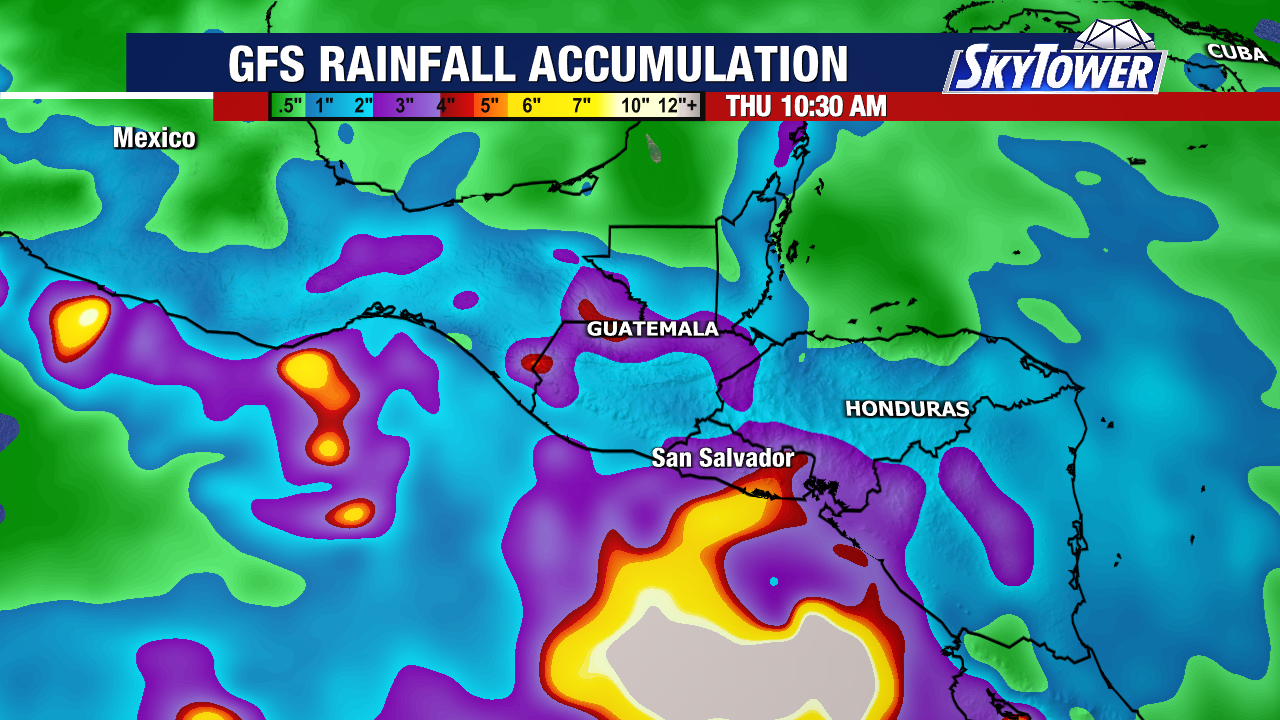
Boris is moving very slowly with flash flooding and mudslides possible for portions of southern Mexico into Tuesday. Isolated areas could get up to a foot of rain. Rainfall totals of 4-8″ are expected across coastal portions of the Mexican states of Guerrero and Oaxaca.

A Tropical Storm Warning is in effect from Laguna de Chacahua to Tecpan de Galeana. Tropical Storm Boris is expected to reach the coast of Guerrero by this evening and weaken quickly as it encounters land.

Closer to Central America, Invest 92E has a high chance for development in the next two days.

This would bring impacts of heavy rain and flash flooding to Costa Rica, Nicaragua, Honduras, El Salvador and Guatemala through mid-week.