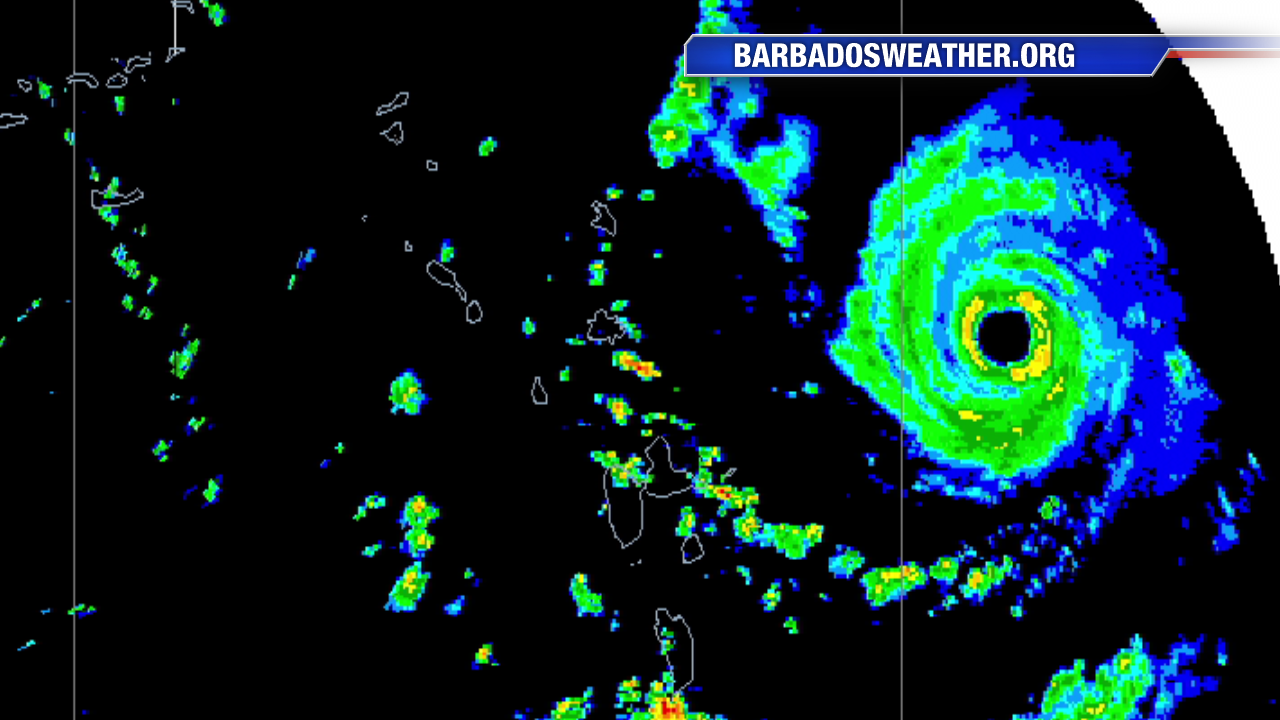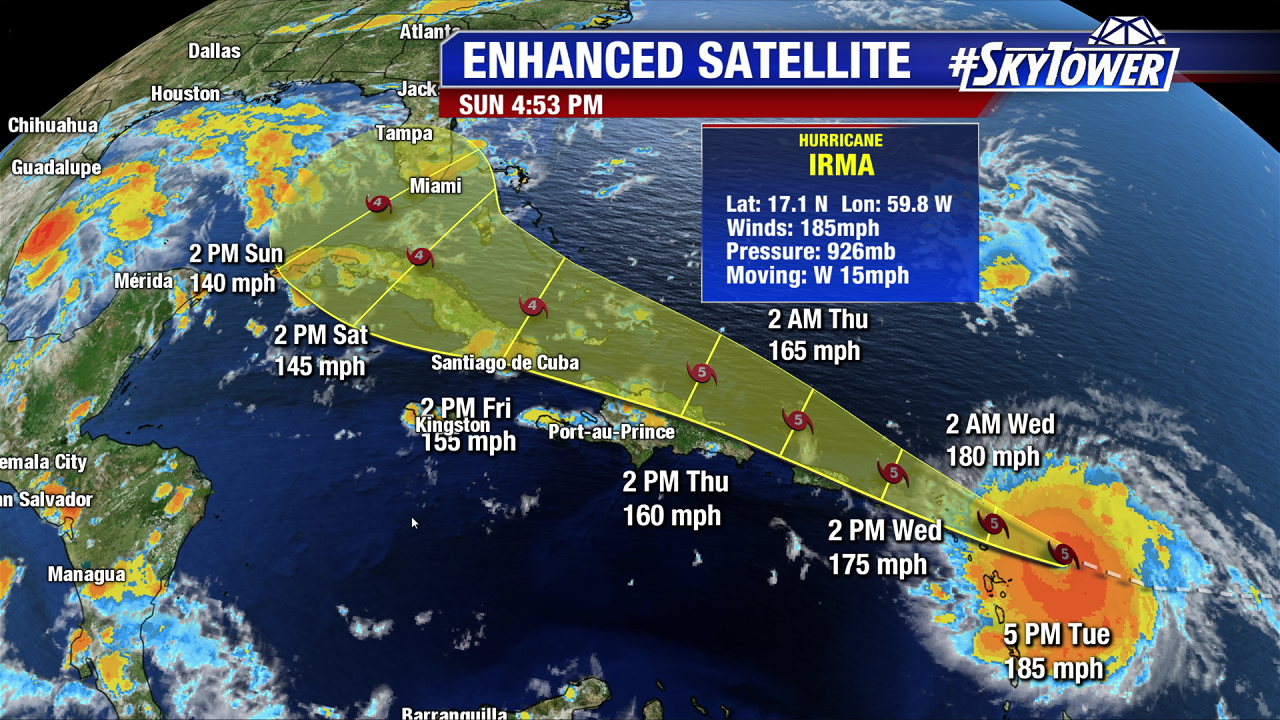
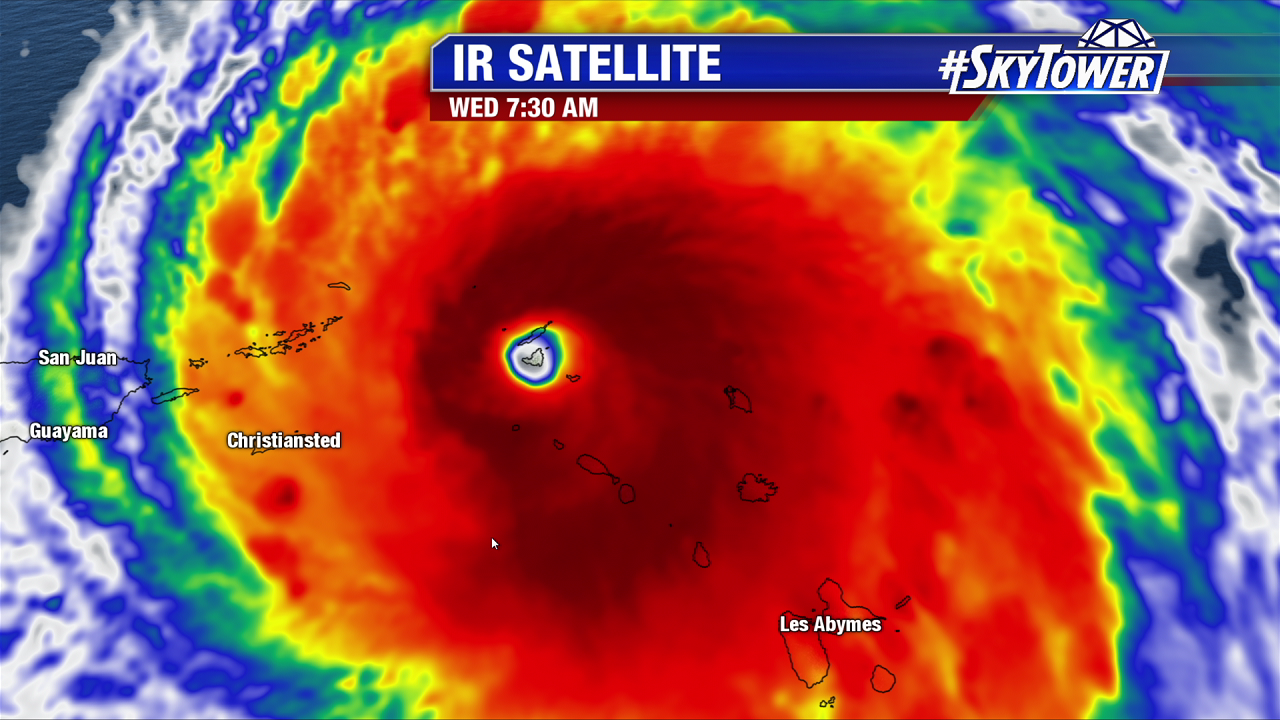
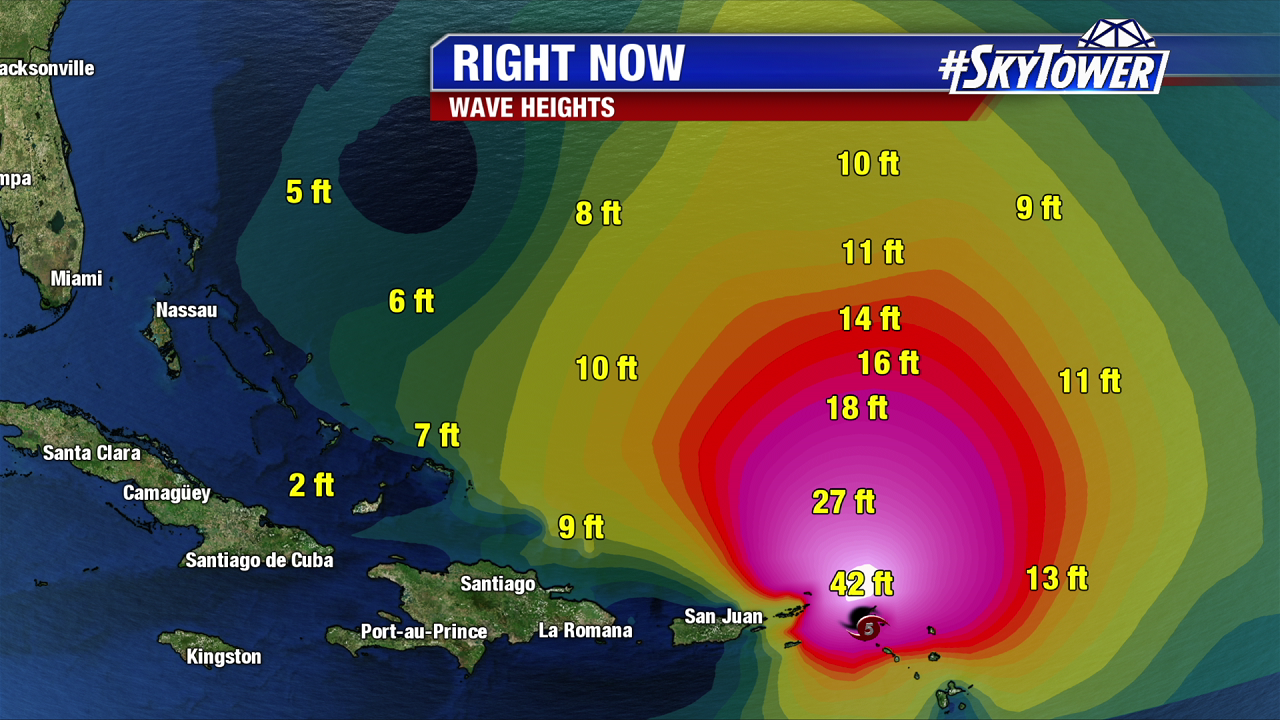
Irma is tied for the second strongest hurricane on record in the Atlantic Basin. It is just behind Hurricane Allen, which peaked at 190 mph winds. The Northern Leeward Islands took a direct hit Wednesday morning. Relentless category 5 Irma slams Barbuda, Saint Martin, and Anguila early Wednesday with 185 mph. A NOAA National Ocean Service on the island of Barbuda recorded a gust of 155 mph before it was knocked out. Images from these islands show catastrophic wind damage. Next in the path of Irma are the U.S. and British Virgin Islands Wednesday afternoon followed a close call with Puerto Rico Wednesday night. The storm is massive, its about 500 miles wide, (estimated on GOES 16 enhanced satellite imagery) and impacts are felt well from the center of circulation. Tremendous rainfall and pounding storm surge will batter the northern portions of these islands. 8-12 inches of rain, with isolated amounts up to 20 inches is likely from the Northern Leeward Islands, Northeast Puerto Rico and the British and U.S. Virgin Islands. A catastrophic storm surge of 7-11 feet is expected in these islands too (while north Puerto Rico will see a 4-6 foot surge). Wave heights build to a remarkable 40 feet+ as of late morning Wednesday. Storm surge will be even worse for Turks and Caicos and the Southeast Bahamas as Irma gains latitude later this work week. The concern for Florida and the Southeast U.S. is that these waves lift northward this weekend and early next week. Due to the size and massive flow around Irma, storm surge will be a major issue on the north and east side of the storm. The Keys will get a double whammy as Irma approaches Saturday and then lifts north.
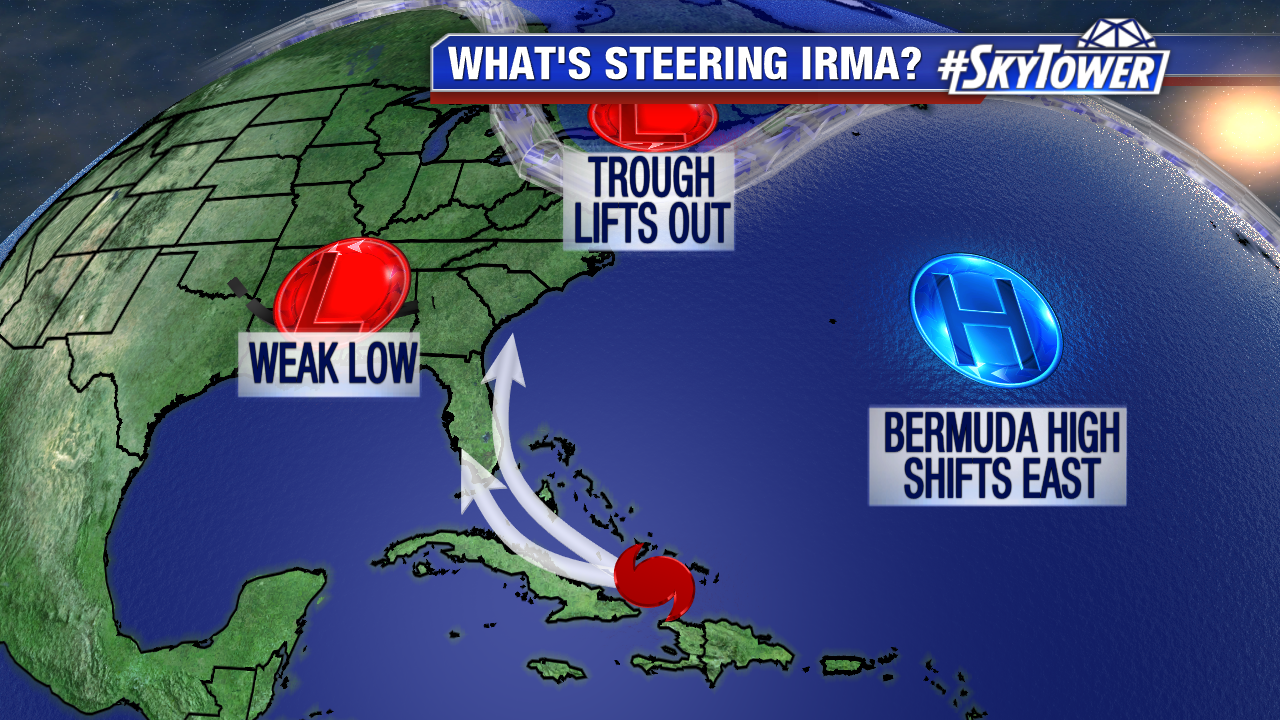
As of 11 AM max sustained winds are at 185 mph and pressure climbs some to 918 mb. Irma now moves WNW at 16 mph under the perimeter of the Bermuda High. The extent of hurricane force winds will fluctuate some as the storm contracts and goes through eye wall replacement cycles. As of 11 AM hurricane force winds extend out 50 miles from the center. The shield of tropical storm force winds is much larger; these go out 185 miles. Irma will remain a very dangerous category 4 or 5 hurricane over the next 4 or 5 days. Water temperatures are warm and wind shear remains low for at least the next 3 to 4 days. There is a noticeable east shift in the 11 AM advisory. This is in line with an eastward trend in computer models. South/southeast Florida is still very much on track for possible major hurricane force winds, horrible storm surge, spin up tornadoes and heavy rain by early Sunday. This advisory shows the anticipated turn north further east and a bit quicker. The entire state of Florida up through the Carolinas need to stay on high alert for any forecast changes. While the track has shifted east, it is still pretty likely Irma will make landfall in the U.S..
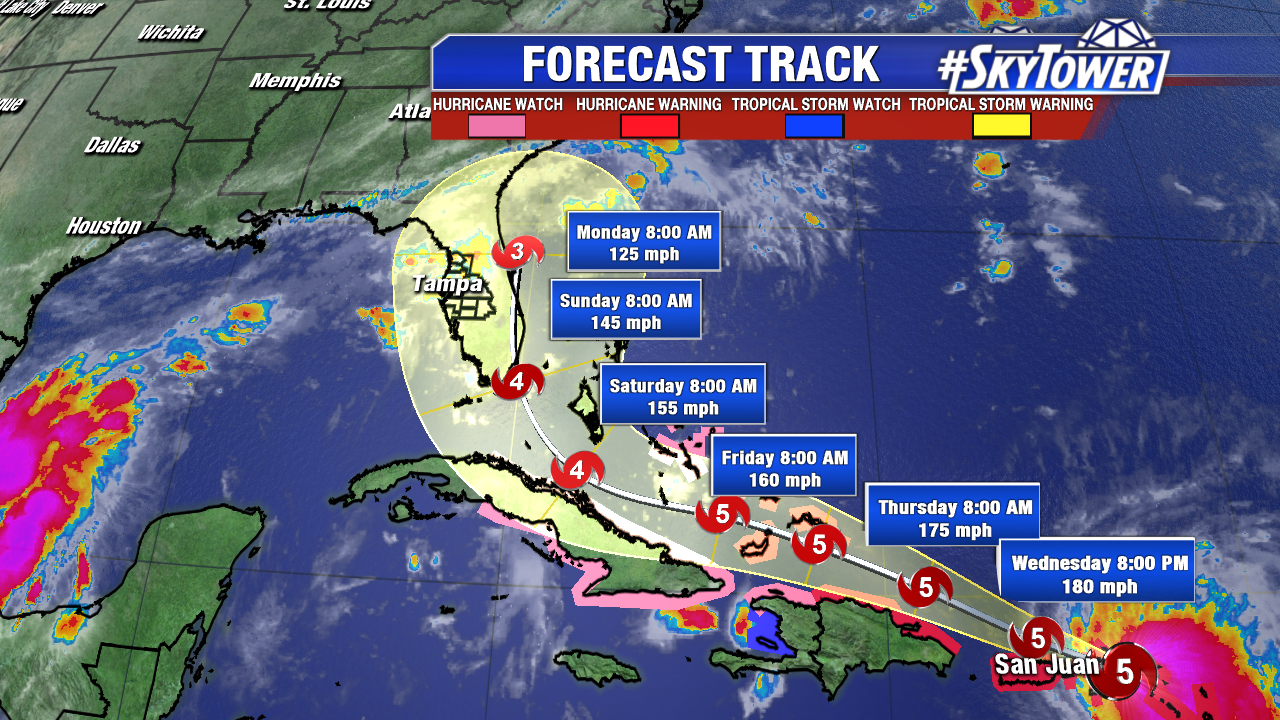
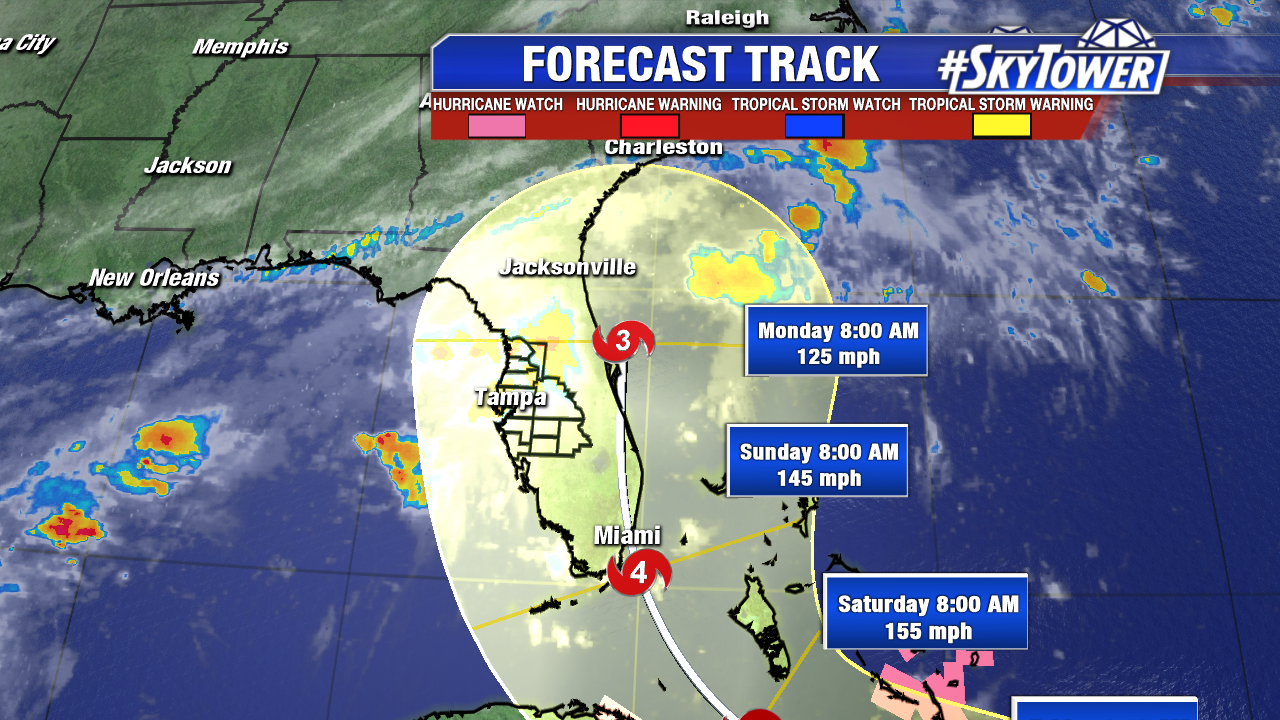
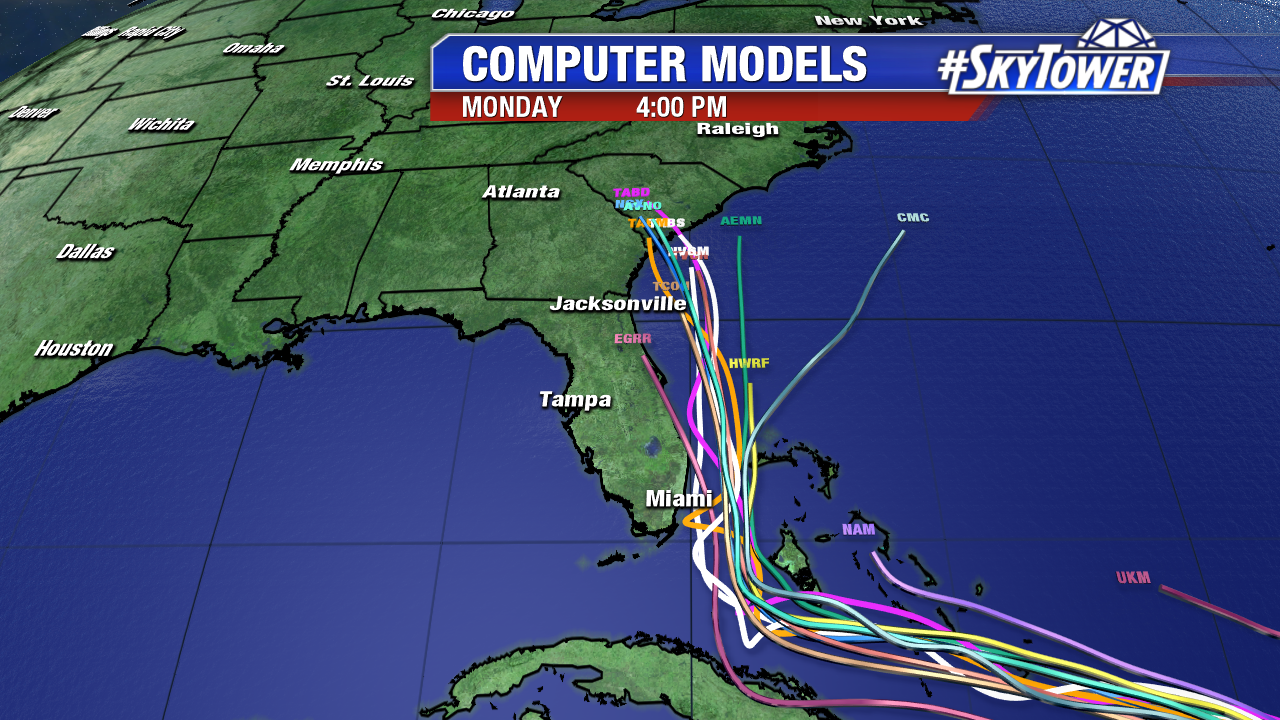
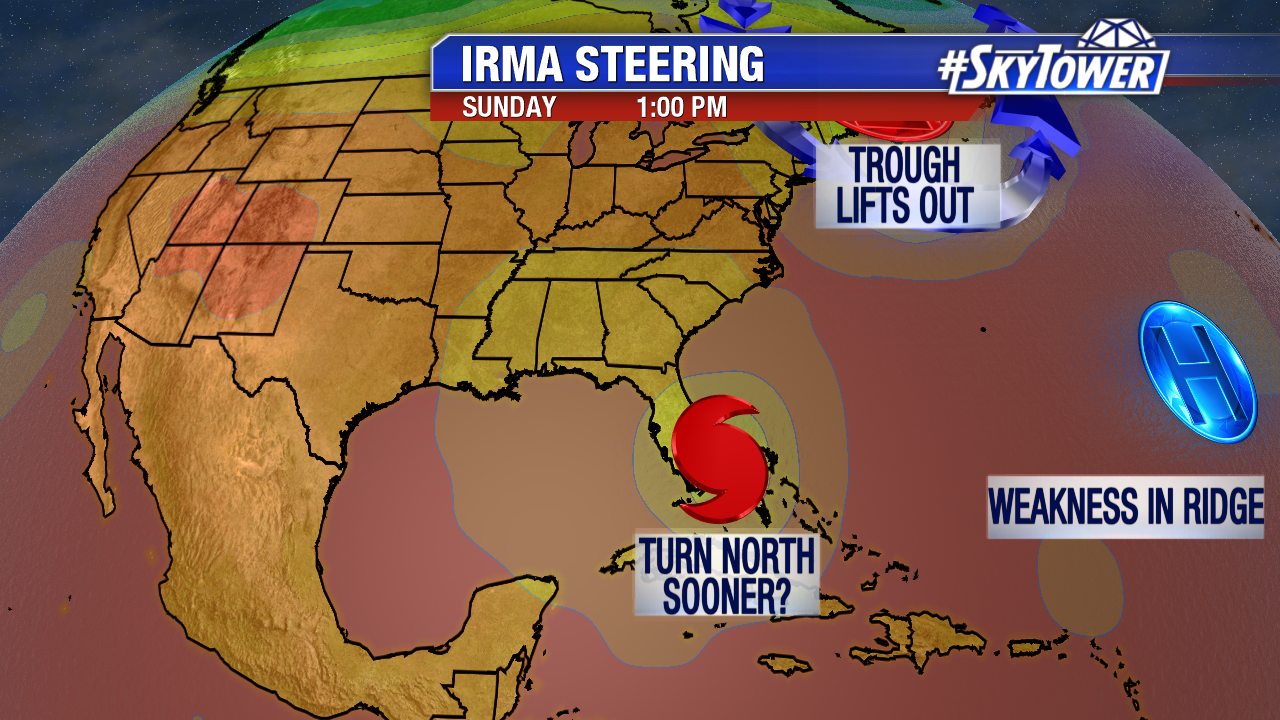
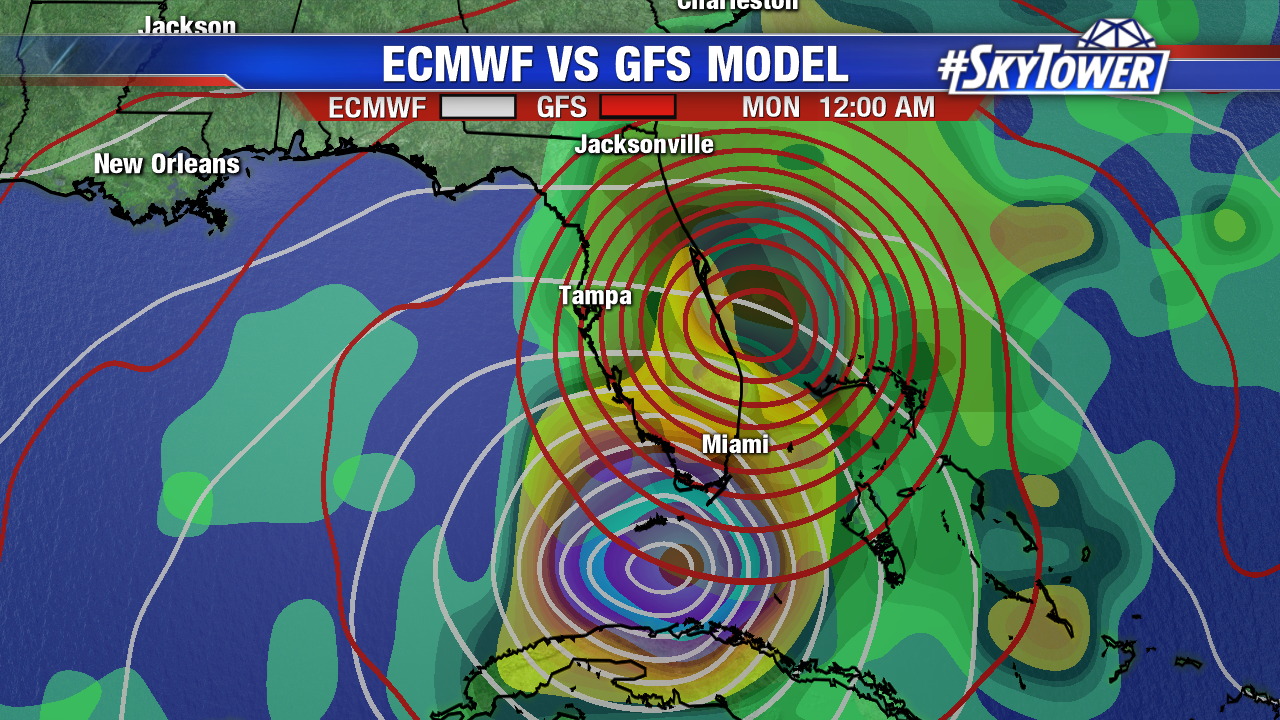
06Z computer models clearly show an east shift under the influence of a weakness in the Atlantic ridge. While many models keep the center of Irma east of the state, numerous ensemble models still bring this dangerous hurricane up through south and southeast Florida Sunday. If this trend continues, South Carolina could see more impacts by Monday. This trend is a favorable one for the Tampa Bay area. If this holds, storm surge will be a non issue, but heavy rain and tropical storm force winds will still be felt across the area, mainly Sunday and early Monday. Remember the 5 day cone error is more than 200 miles. Things can change. Stay prepared and stay informed.