Hurricane Florence Draws Closer – Conditions Begin To Deteriorate Thursday Morning

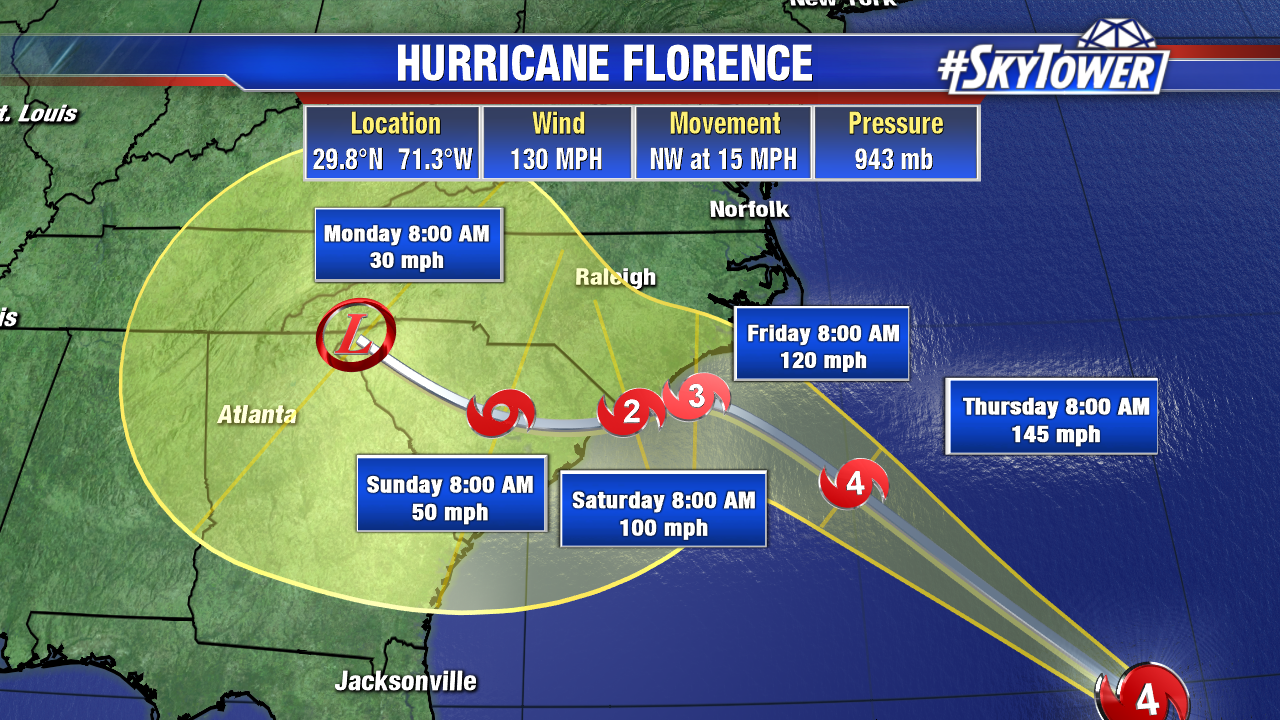
At 11am Wednesday, Hurricane Florence was located just over 500 miles southeast of Myrtle Beach, SC. It’s a massive storm that will have far-reaching impacts. Residents in the Carolinas should be wrapping up their preparations today.
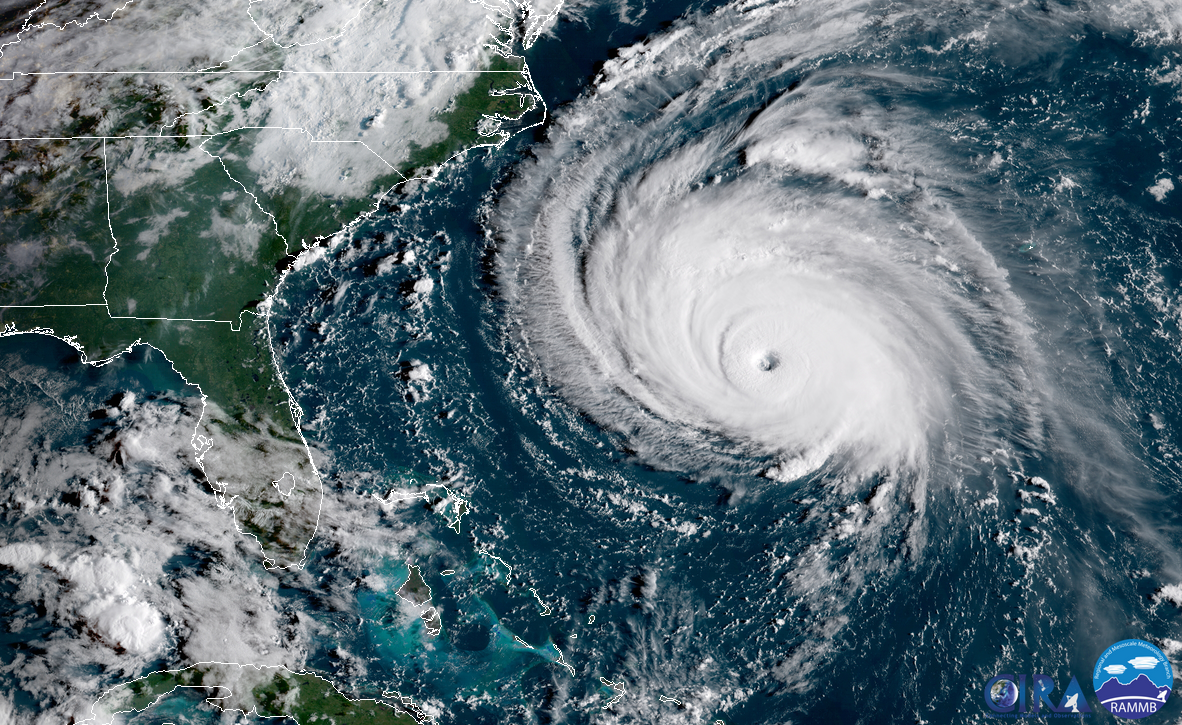
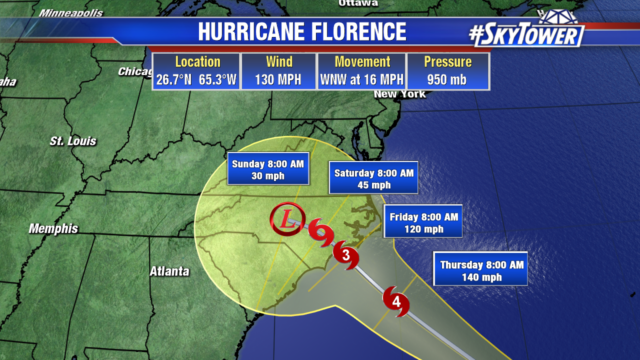
Hurricane forecast winds currently extend out about 70 miles from the center, with tropical storm force winds extending out about 175 miles. Max sustained winds are at 130 mph. While conditions do favor some strengthening over the next 24 hours, eye wall replacement cycles will likely result in some intensity fluctuations. Overall, Florence is still expected to approach the coast as a major hurricane.
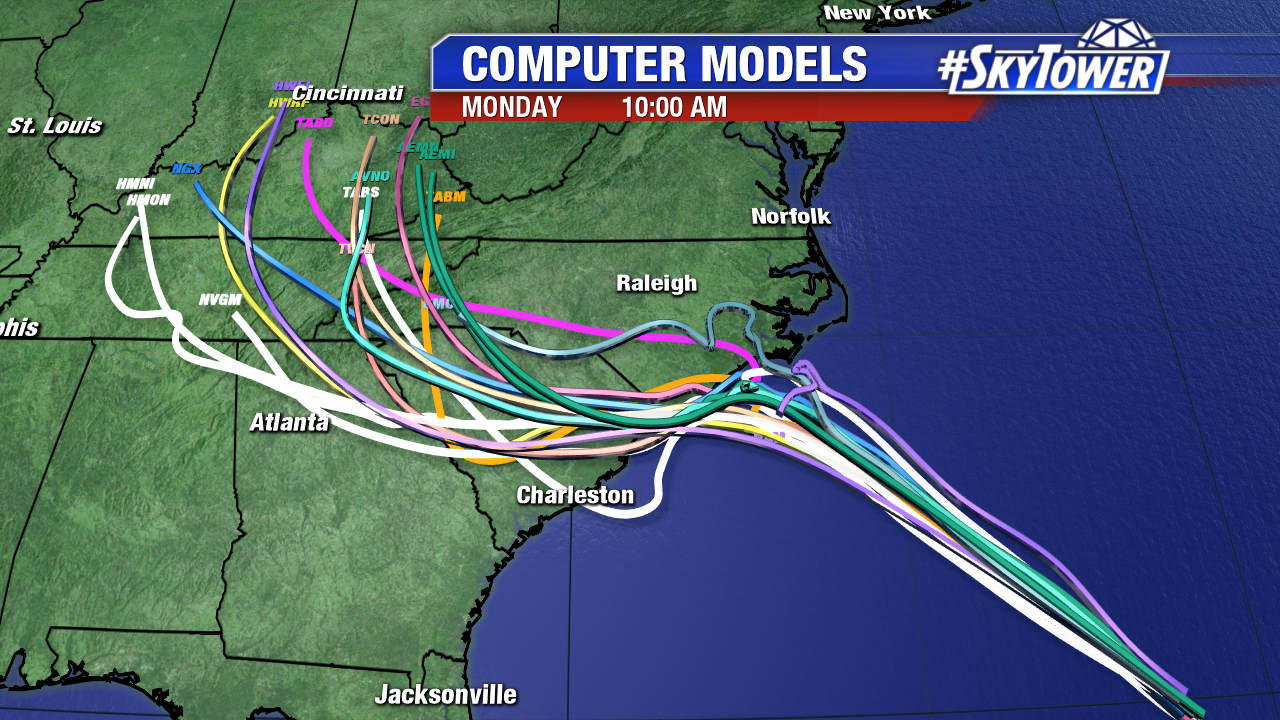
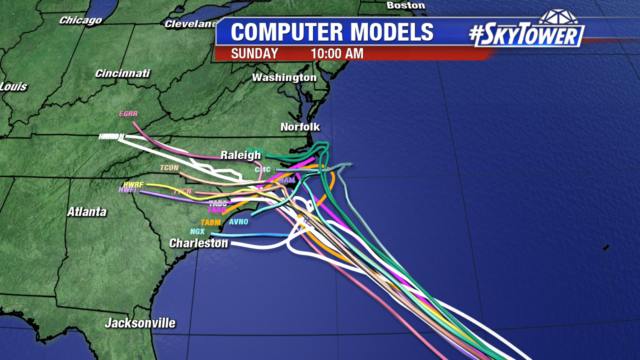
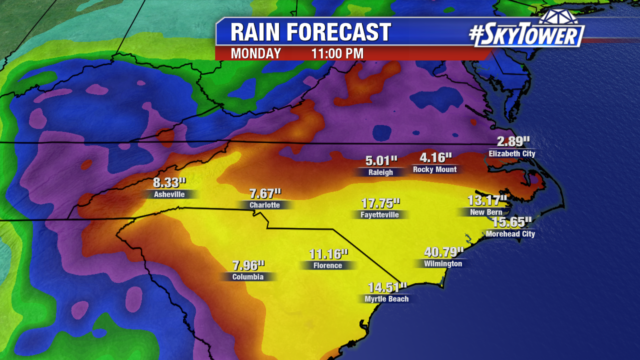
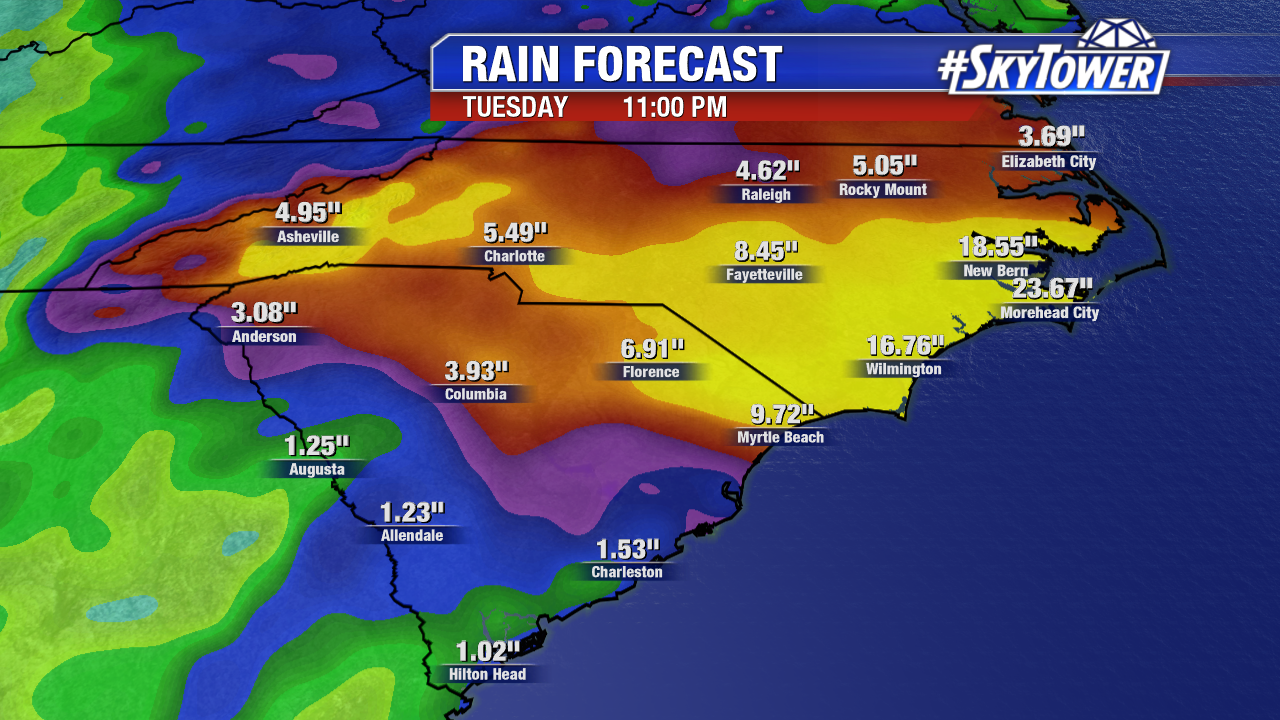
Track guidance is in very good agreement leading up to landfall over the next 48 hours, but as the storm slows, and perhaps stalls over the Carolinas, the forecast becomes incredibly tricky. In the last day or so, we’ve have seen a shift to a more southwesterly track as the storm moves inland – spreading the inland flooding threat southward, deeper into South Carolina. There will widespread 10-20″ totals by early next week, with possible isolated amounts of nearly double that. While coastal areas will deal with life-threatening storm surge and damaging winds, the inland freshwater flooding threat will be the most widely-felt impact of Hurricane Florence and should be taken very seriously. Reminder, this is just one model run of rainfall output. It’s important not to focus on individual numbers for a particular town, but rather the potential.
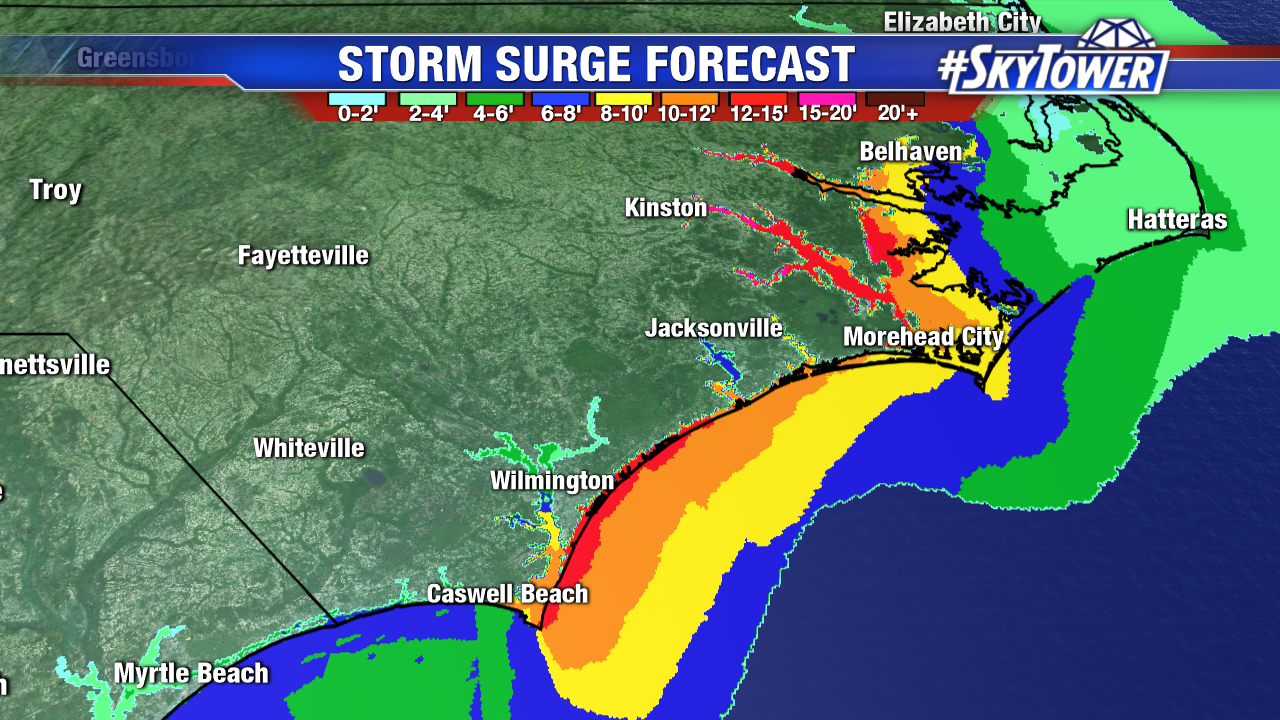
As noted above, storm surge flooding will be a major, life-threatening issue along the coast. As the storm slows down on it’s approach to the coast, a long period of strong onshore flow will result in a surge of 10-15’+ in the hardest hit areas east of the center of circulation. If you live near the coast and have been told to evacuate, please follow those orders. There is still time to leave through the day on Wednesday. Bottom line is, this is not a storm to mess with.
Hurricane Florence continues on its path; concerns over stalling system increase massive flood risk

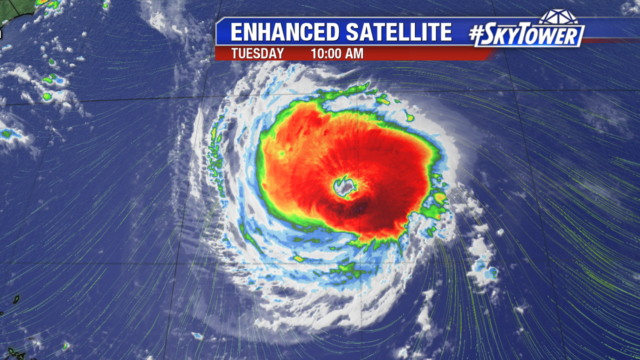
Hurricane Florence went through an eyewall replacement cycle early this morning. During this time the inner eyewall collapses and become ragged for several hours as a new eyewall reforms outside of the original. During this process it is normal for the hurricane to loose intensity as was noted this morning but once this process it complete it begins to ramp up in strength once again.

As of mid-morning on Tuesday the eye still has a somewhat ragged appearance as this process completes. It is likely to start regaining strength later this afternoon. Overall, the forecast remains unchanged with a major hurricane moving onshore early on Friday morning along the North Carolina coastline. The exact path will continue to shift back and forth as things evolve so much of South Carolina is still in the cone.

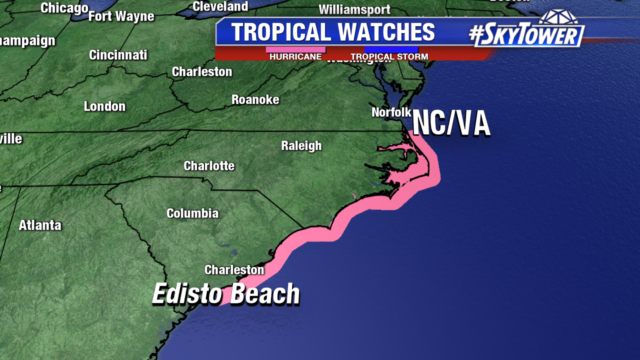
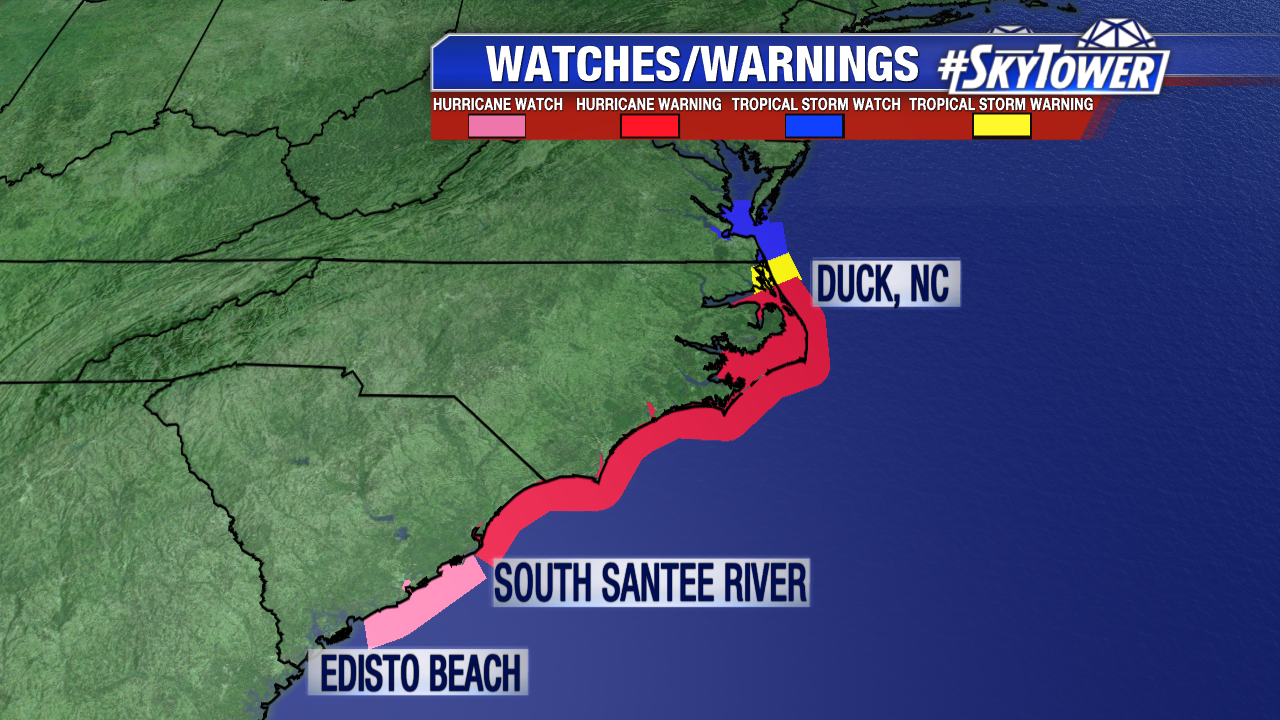
A hurricane watch has now been issued from the North Carolina/Virginia border southward to Edisto Beach in South Carolina.

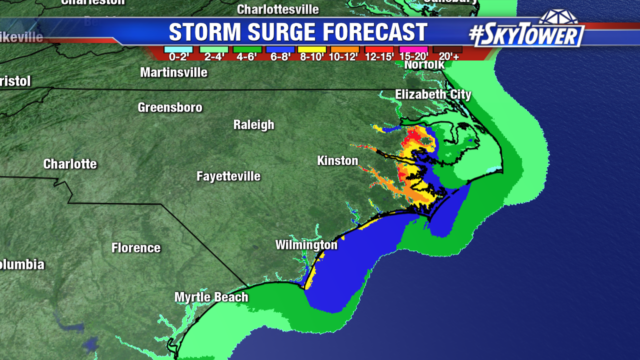
To the right of the center will be the areas affected by the storm surge. The sounds in North Carolina could be hit especially hard with a storm surge. The current forecast calls for a surge between 10-15 feet in these sounds. Further down the coast near Wilmington the surge could be between 6-10 feet. This will change as the exact intensity and track shift over the coming days.

The various models have been suggesting for days that a ridge will build to the over the Great Lakes and will cause Florence to stall and begin to meander. There is growing concern that this could happen close the coast which would allow Florence to continue to tap energy from the Atlantic Ocean.

The rainfall totals from a stalled system along the Carolina coastline are disturbing. It is important not to focus on exact totals but rather the potential of extremely large amounts of rain that would produce catastrophic flooding. Exact amounts will shift depending on many factors including the forward motion of the hurricane after landfall.

This is a particularly dangerous situation and it is important for those ordered to evacuate follow the orders from emergency officials.