Dorian Strengthening; Sights Set On Florida

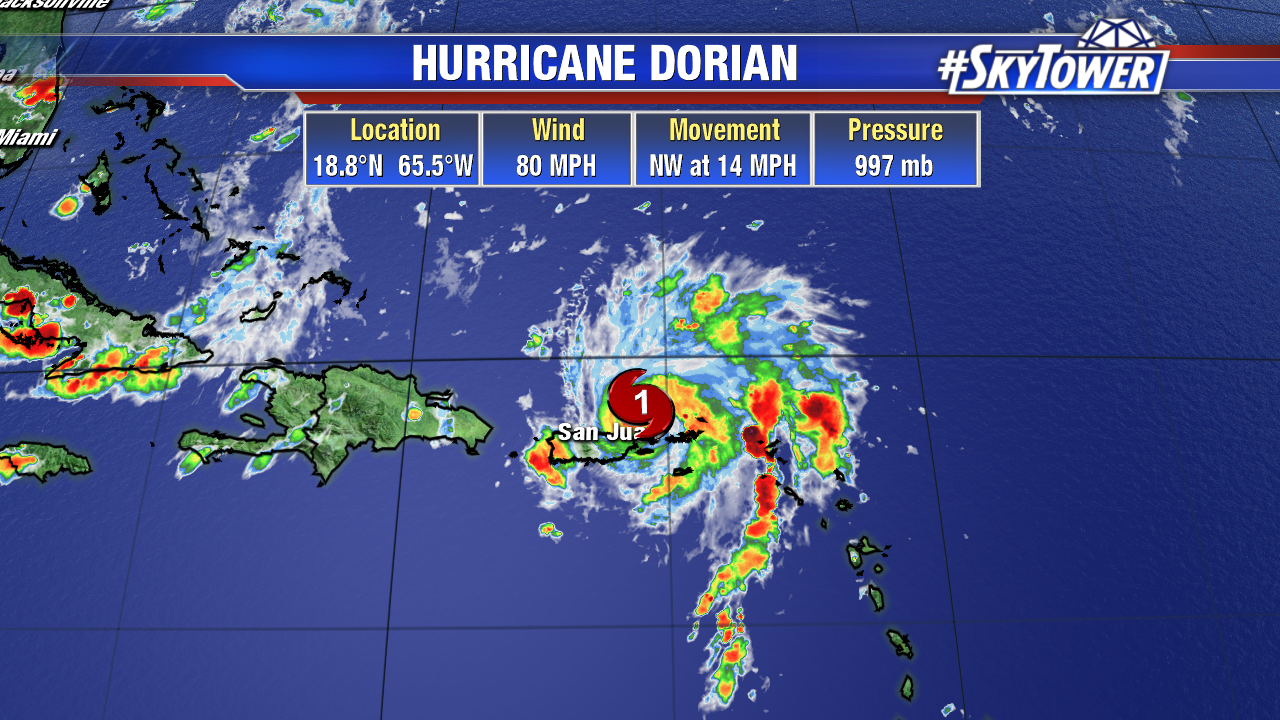
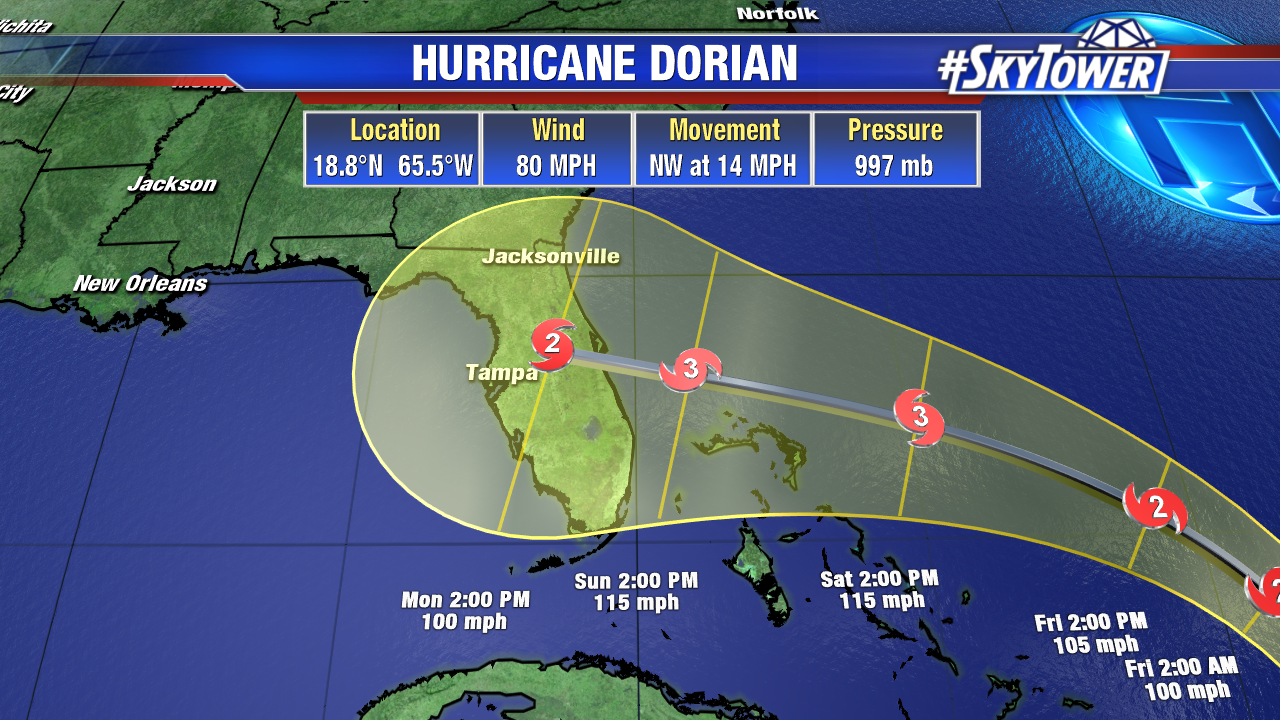
Dorian remains a healthy category 1 hurricane. Pressure continues to fall and wind speeds will be increasing going forward. As of 11am Thursday, the storm was located about 220 miles NNW of Puerto Rico. Movement to the NW will continue for roughly another 24 hours before Dorian takes a turn more to the west toward the Bahamas and Florida. The latest track from the National Hurricane Center has Dorian making landfall as a Category 4 hurricane on Florida’s East Coast.
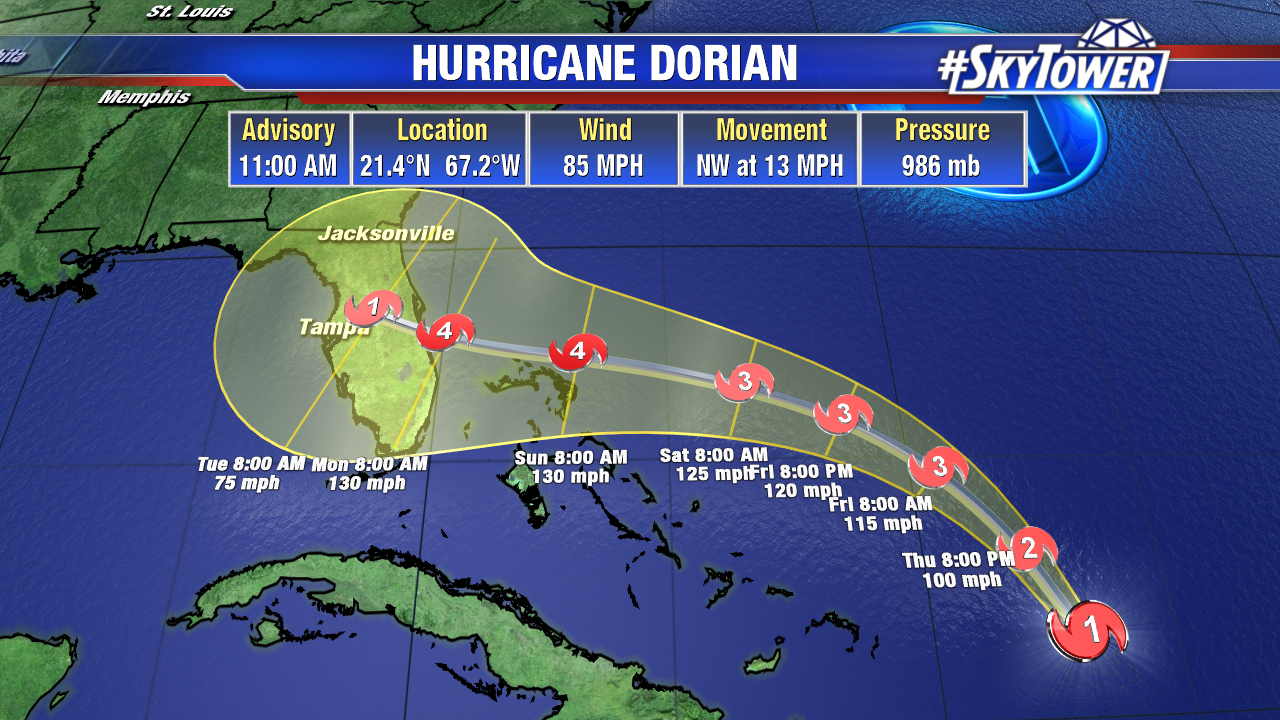
While it’s still too early to nail down exactly where the storm will come ashore, models have certainly come into a little better agreement in the last 24 hours. Consensus right now seems to be a landfall somewhere between Cape Canaveral and West Palm Beach. Obviously, that’s still a fairly large spread, but it will shrink over time.
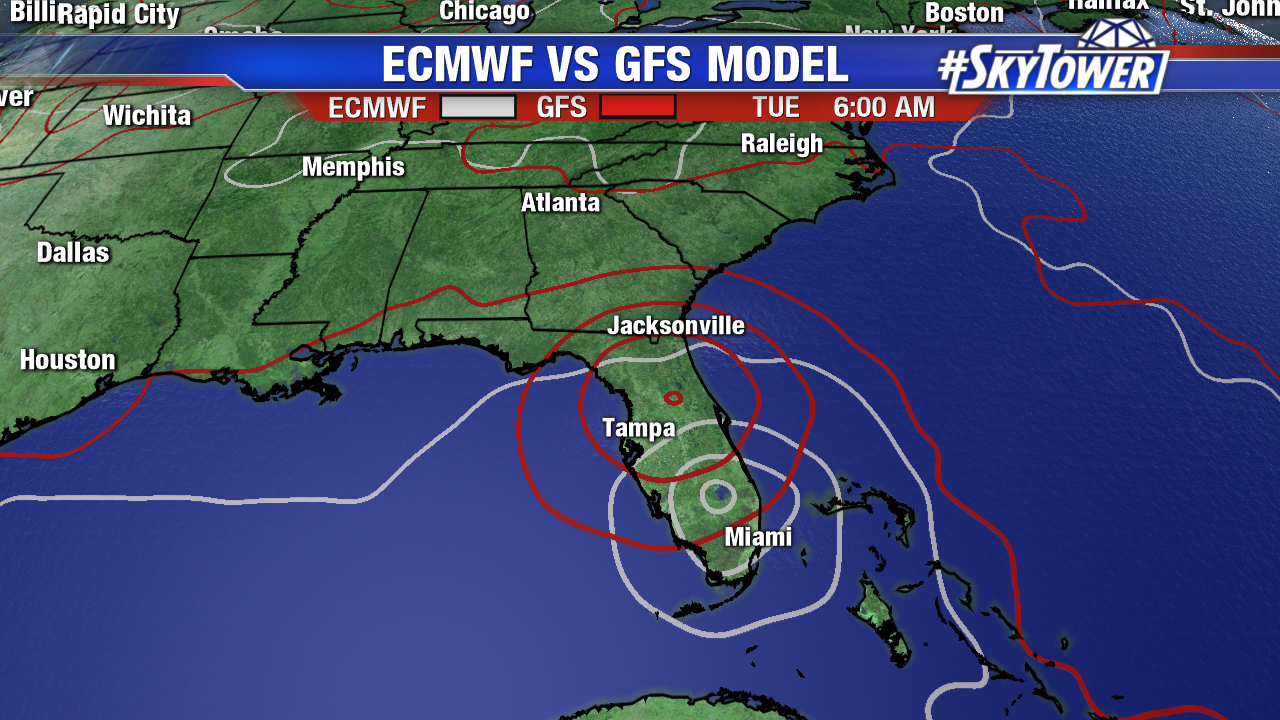
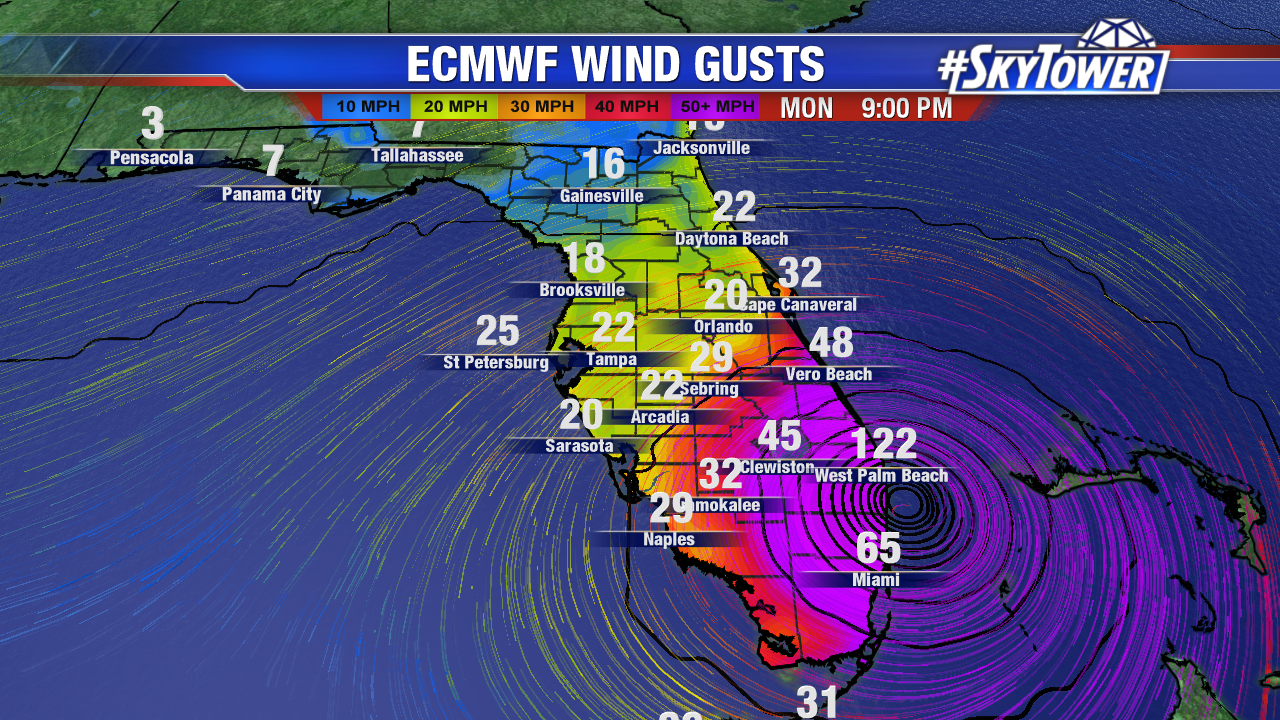
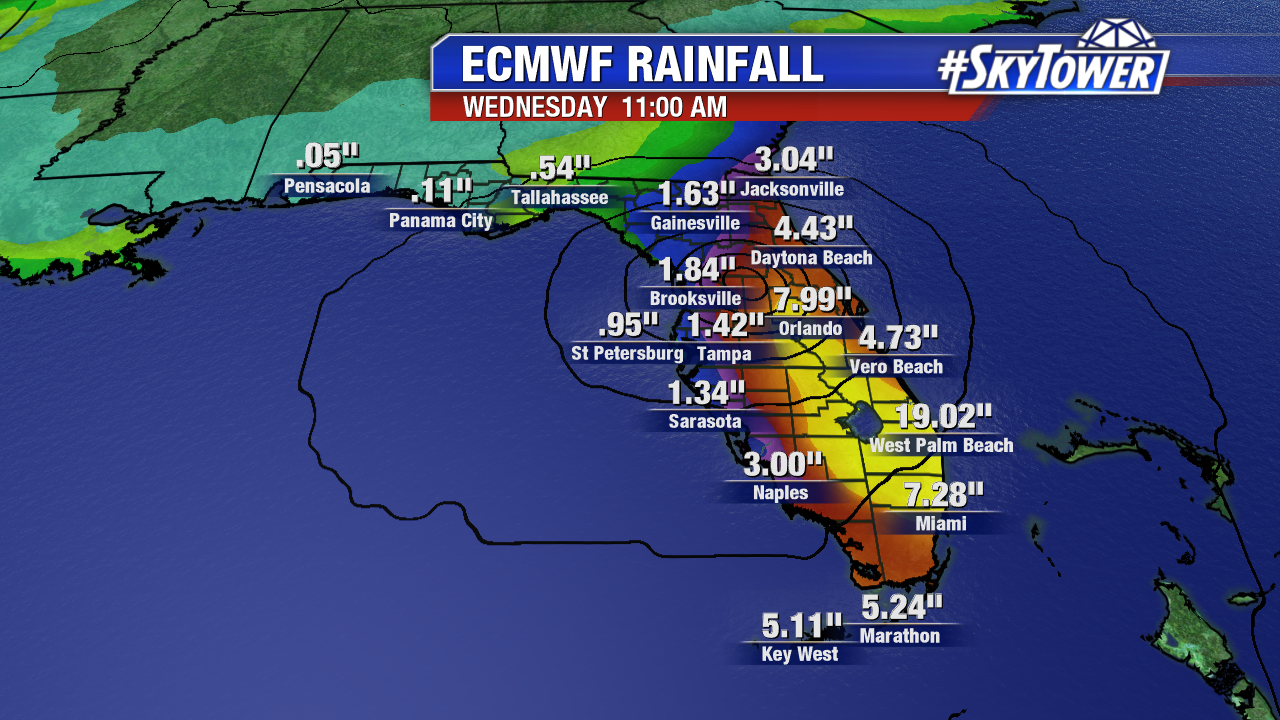
The exact track will determine who sees what, especially in regards to storm surge and the highest winds. For now, anyone along Florida’s East Coast should be preparing for a major hurricane making landfall. Inland threats will range from hurricane-force wind gusts, to freshwater flooding, to tornadoes. We will be able to pinpoint local impacts as Dorian draws closer in the coming days. Stay tuned.
 

Hurricane Dorian Moving North of Puerto Rico; Will Strengthen In Coming Days

At 5pm Wednesday, Hurricane Dorian was located about 50 miles ENE of San Juan, Puerto Rico. Max sustained winds have now increased to 80 mph.

The good news is that Puerto Rico – still recovering from Hurricane Maria – was spared for the most part, as Dorian passed to its east today. Now the focus turns to potential impacts for the Bahamas and Florida over the holiday weekend.

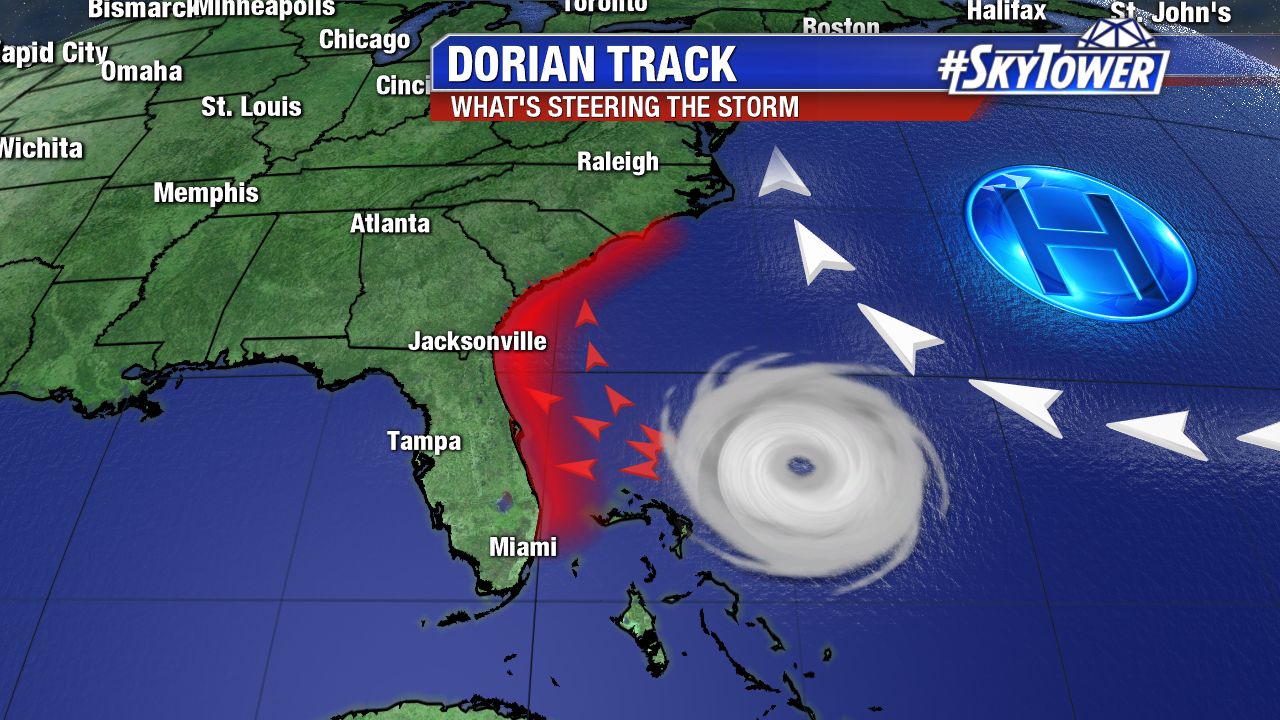
Steady intensification should continue over the next 3-4 days as the storm moves NW, and eventually turns WNW towards Florida. The eventual track really boils down to the strength of the ridge to its north. Right now, it looks as though that ridge will be strong enough to push the storm into the east coast of Florida. However, any weakness in the ridge would open the door for a turn to the north.

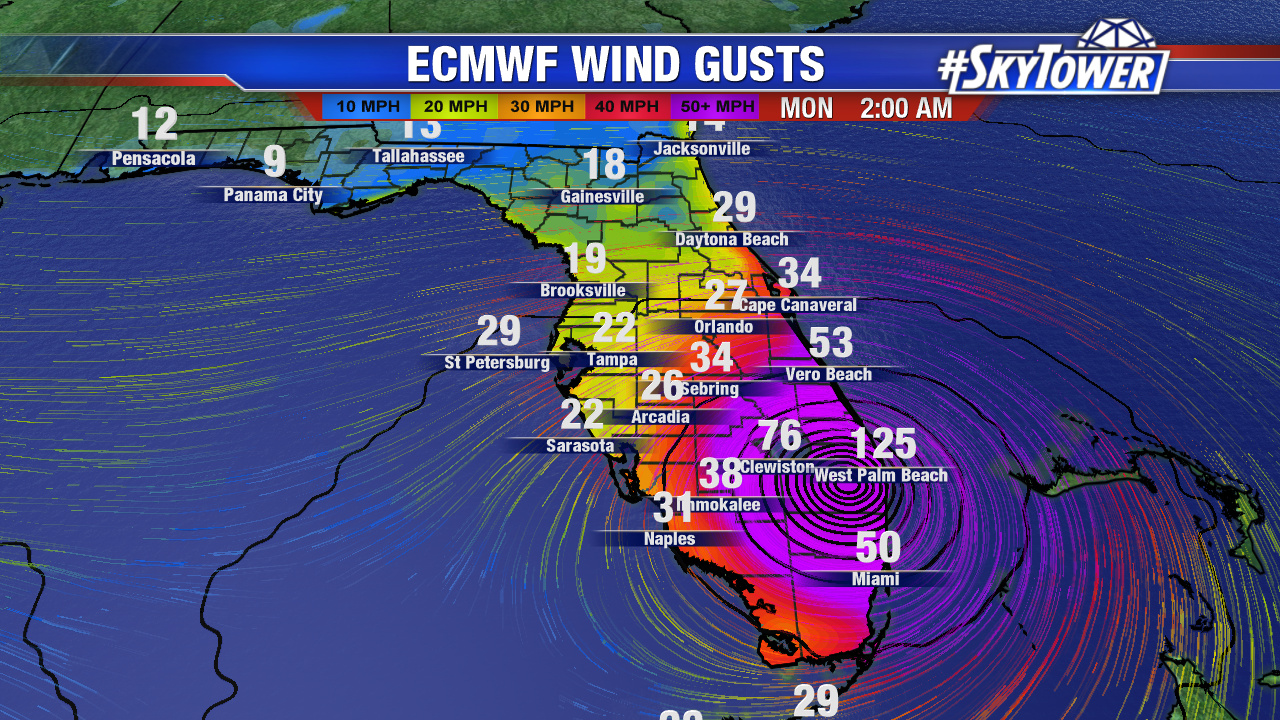
The afternoon Euro model run remained consistent with the idea of a major hurricane landfall in South Florida, and subsequently moving west across the state. The GFS solution, which seems a little less likely at this point, is a weaker storm making landfall north of Cape Canaveral. Impacts will be highly dependent on the exact track, and the storm’s angle of approach. We’ll be able to pinpoint those impacts as we get closer to landfall. By Friday, we should have a pretty good idea. At this point, those along Florida’s east coast should be preparing for the possibility of a major hurricane landfall either late Sunday or early Monday.